
Bob
Bogash
| Seattle Airlines |
Bob
Bogash
|
|---|
| Home Aviation Photos Safety Index Reader Comments Contact | |||
| If you're an airplane Buff, well Seattle has been a Mecca for many years, albeit not quite so wonderful as it was in the Good Old Days.
As a young single buck working at Boeing, a nerd as well, I skipped the
bar scene, and (most of) the women, and chased airplanes instead.
Each weekend, I "made the rounds" with my camera and notebook.
Living in Rainier Beach, I headed for Renton to shoot all the latest
Boeing new rollouts; then hit Boeing Field; and finally SeaTac.
Every few months I'd also hit YVR (Vancouver). A lot was done with
my good airplane buddy Ted Gibson, and we'd call back and forth
excitedly when we spotted a new and rare bird. Seattle also had a vibrant Airshow scene with annual shows at McChord AFB, Sand Point NAS, Navy Whidbey, Paine Field, and Abbotsford. Blue Angels, Thunderbirds, and the Canadian teams. But, in addition, Seattle was home to a number of airlines. I hung out at their facilities quite a bit and eventually became friends with a lot of the staff. You could do that with ease in those days. Today? Not so sure. Primarily, there was West Coast Airlines at Boeing Field, and Pacific Northern and Alaska at SeaTac. But also, a few others like Standard Airways. Aero America (International) and Horizon came after my Seattle photo window, although I saw International in Hawaii. West Coast Airlines
 A West Coast DC-3 in front of their Boeing Field hangar Founded in 1941, the airline began service in 1946, and existed until it merged with Bonanza and Pacific in 1968 to become Air West. Air West later became Hughes Air West, which merged into Republic (North Central, Central and Southern), which was later acquired by Northwest, which in turn was acquired by Delta. Got all that straight? It operated exclusively from Boeing Field, used the passenger terminal there, and had a maintenance hangar there. I hung out at their hangar and watched their scheduled operations at BFI.  A DC-3 undergoing maintenance in their BFI hangar.
WCA's fleet consisted of DC-3, F-27, Navajo, and DC-9 aircraft. They were the first local service airline to operate turbine equipment when they started using the Fairchild (nee Fokker) F-27 in September 1958. 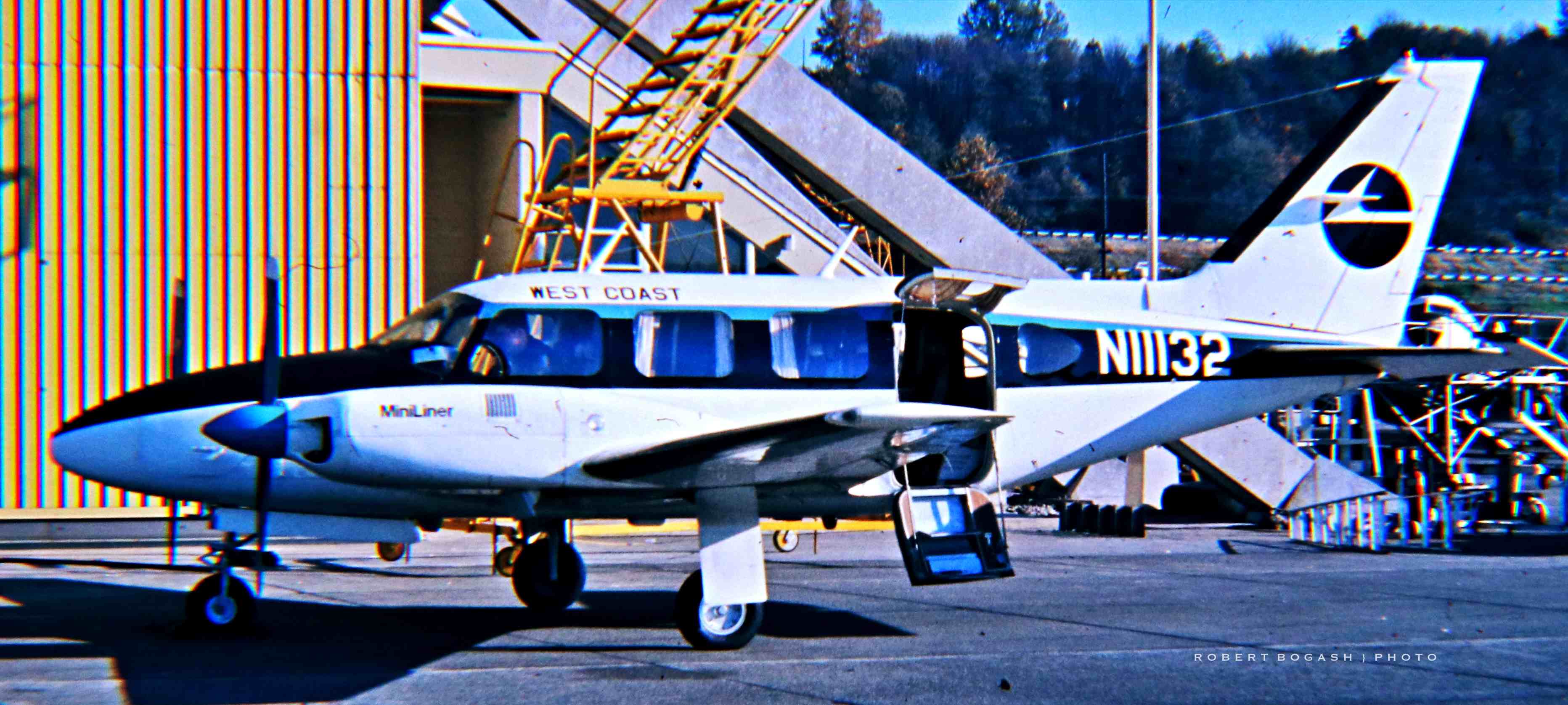 Navajo  Fairchild / Fokker F-27
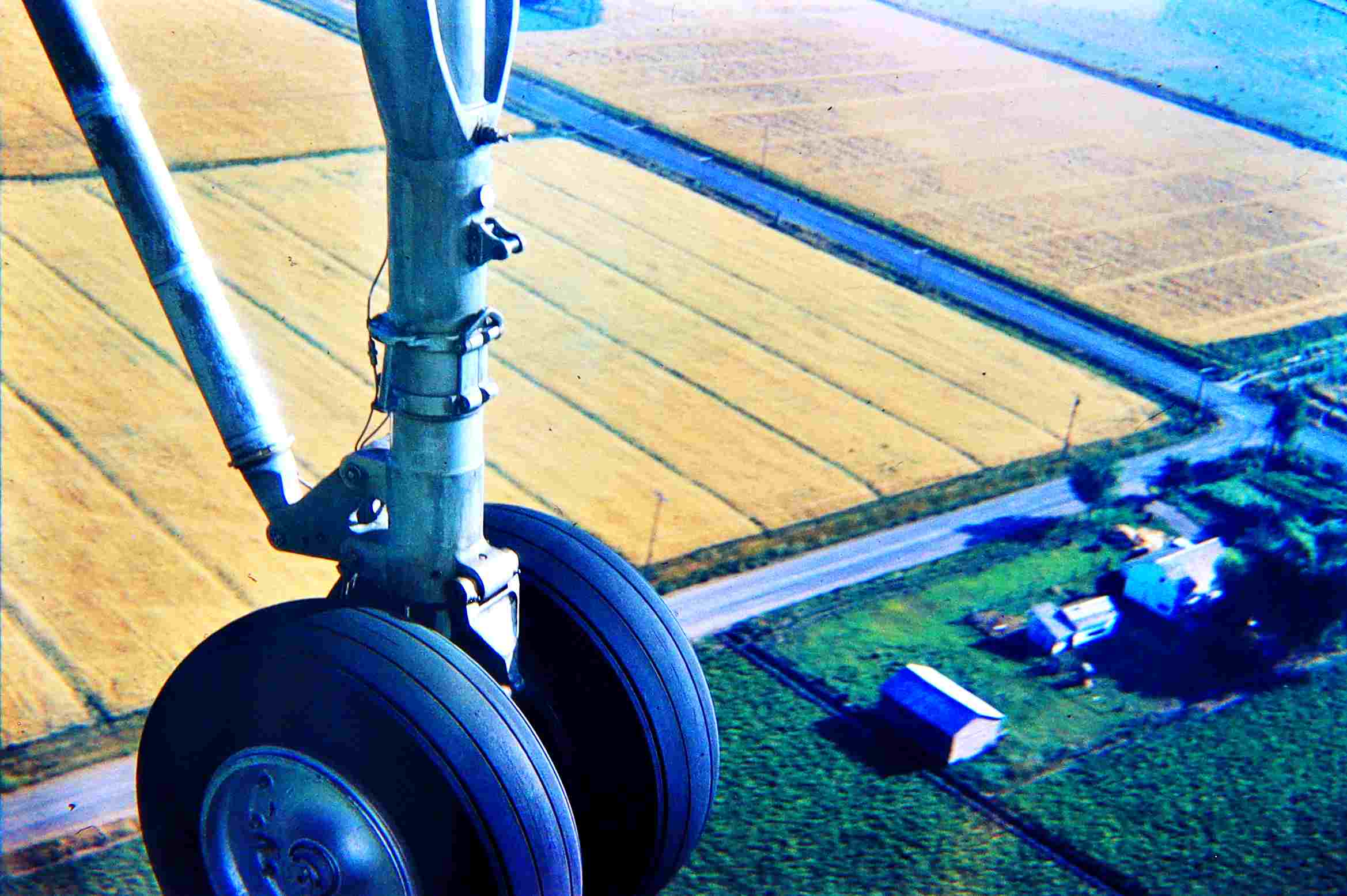 The F-27 was a great passenger airplane. It had big oval windows and the high wing allowed an unobstructed view of the landscape (except when the gear was down, of course!) I first connected with WCA in September 1963 when I flew one of their F-27s (N2708) from SFO to Portland with numerous intermediate stops. Here we are making a stop in Klamath Falls. 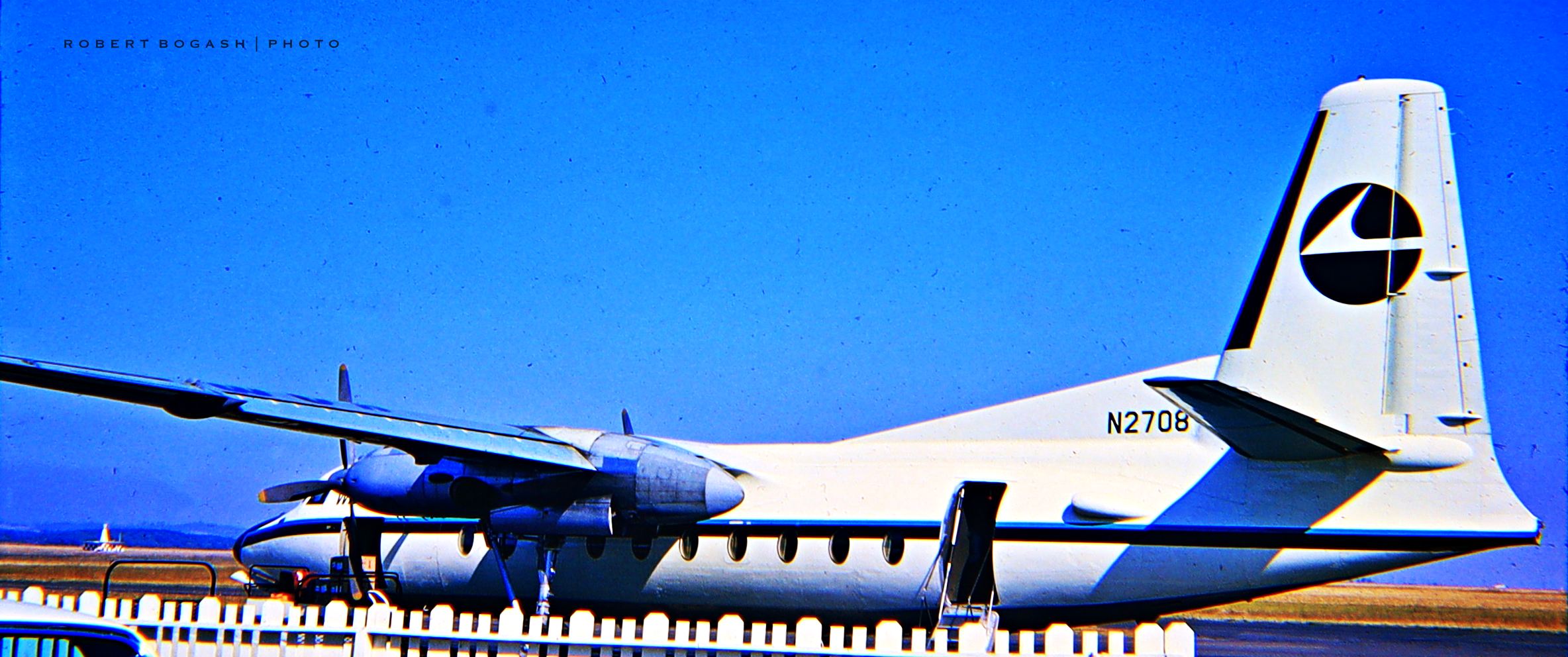 Sistership N2712 was lost at Klamath Falls in a fatal crash while attempting a take-off in a snowstorm on 10 March 1967. And N2707 was lost in a non-fatal accident when it landed short in Calgary on 24 August 1963. 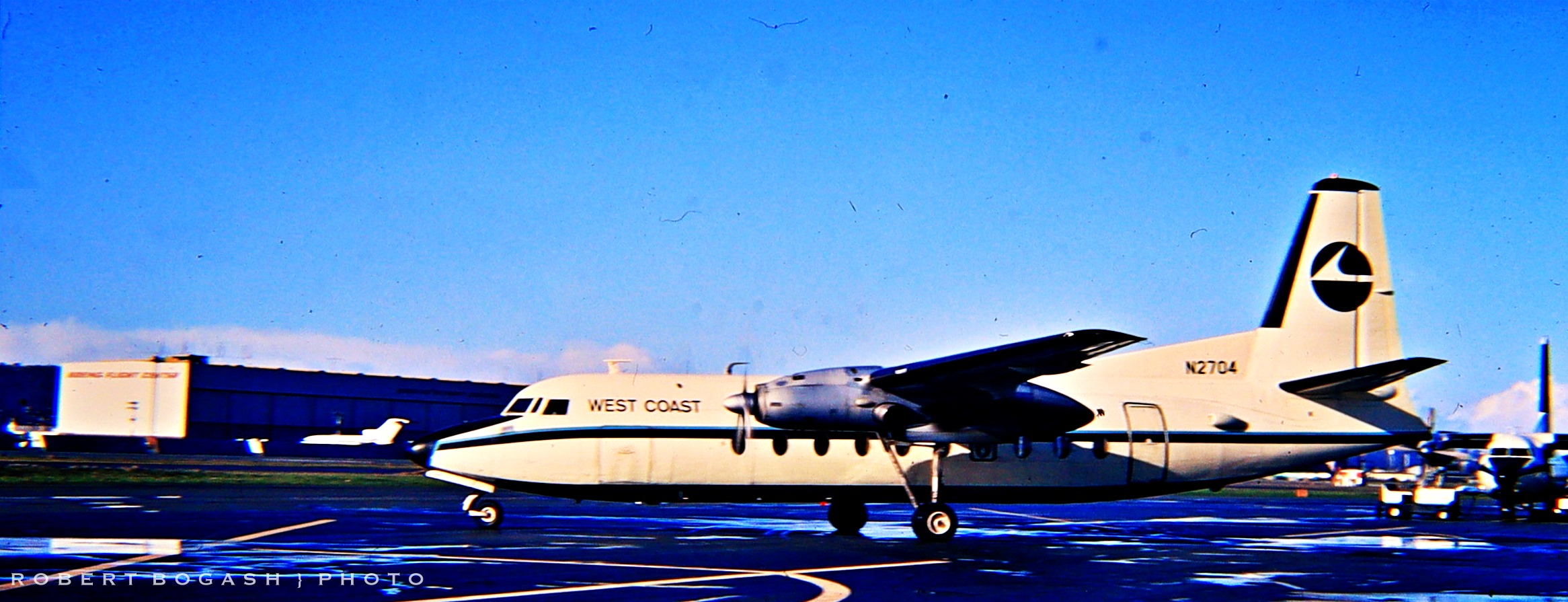 In 1966, despite looking across the field at Boeing, West Coast acquired 3 DC-9-10's from Douglas. They were N9101, N9102, and N9103. The primary reason, I'm sure, is that the 737 was still in development, had not yet flown, and was several years from entering service. Behind the BAC-111 and DC-9 (and Caravelle), the 737 was really late to the twin-engine shorter range party. 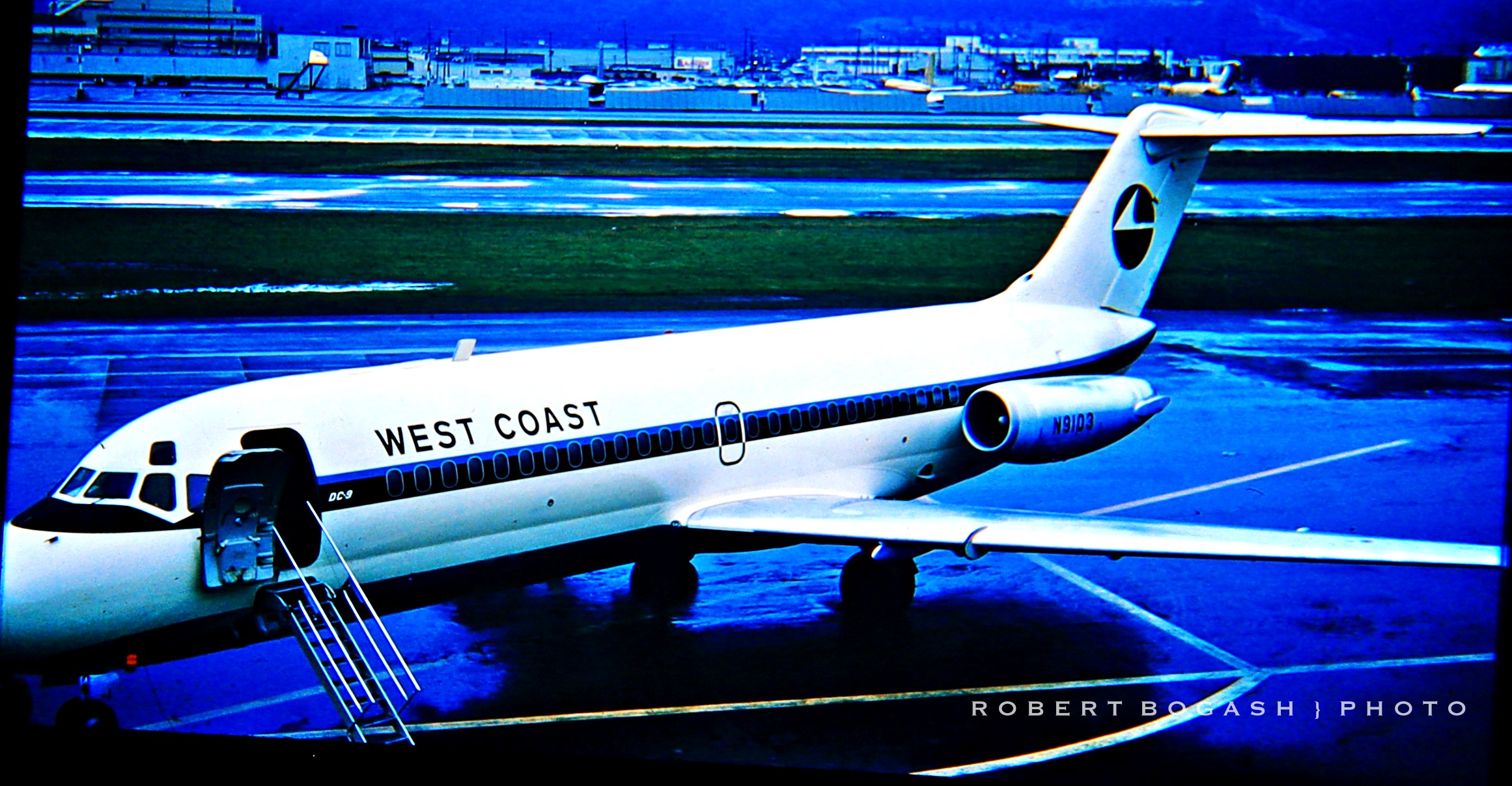 Third DC-9 N9103 - looking across at Boeing Flight Line 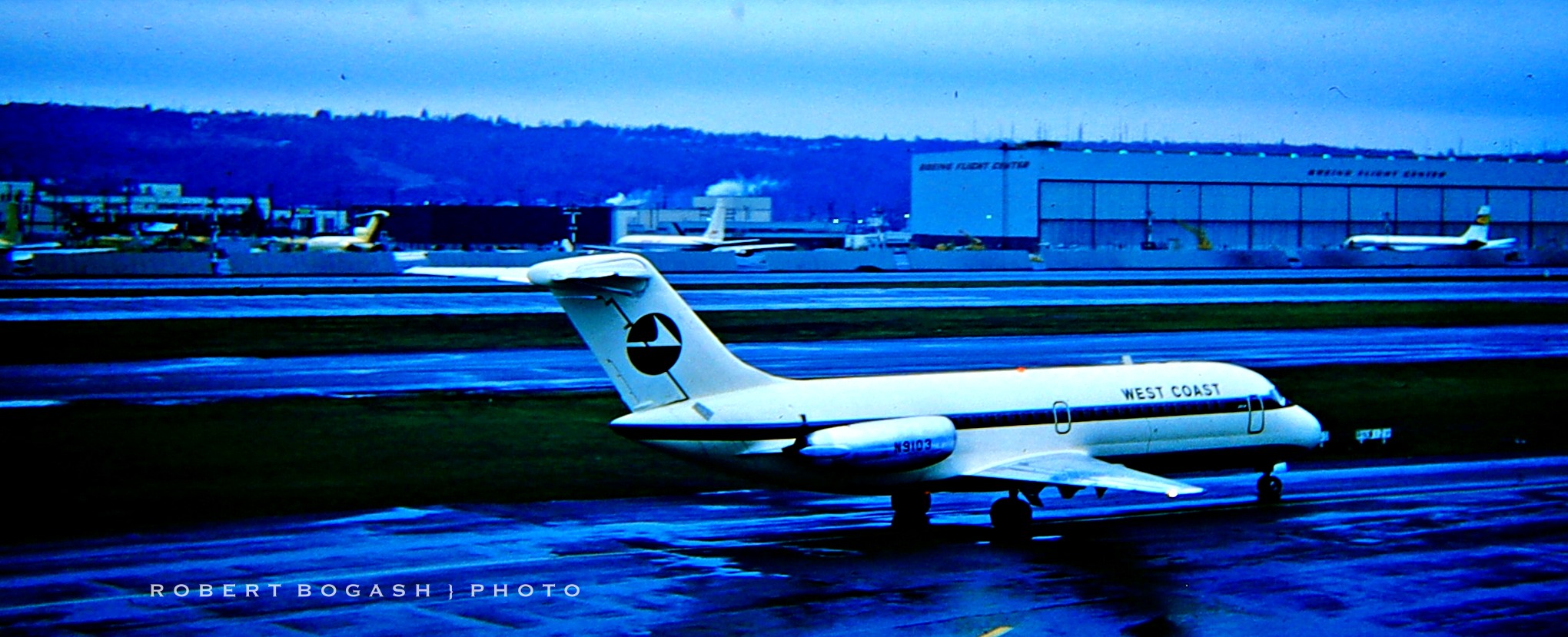 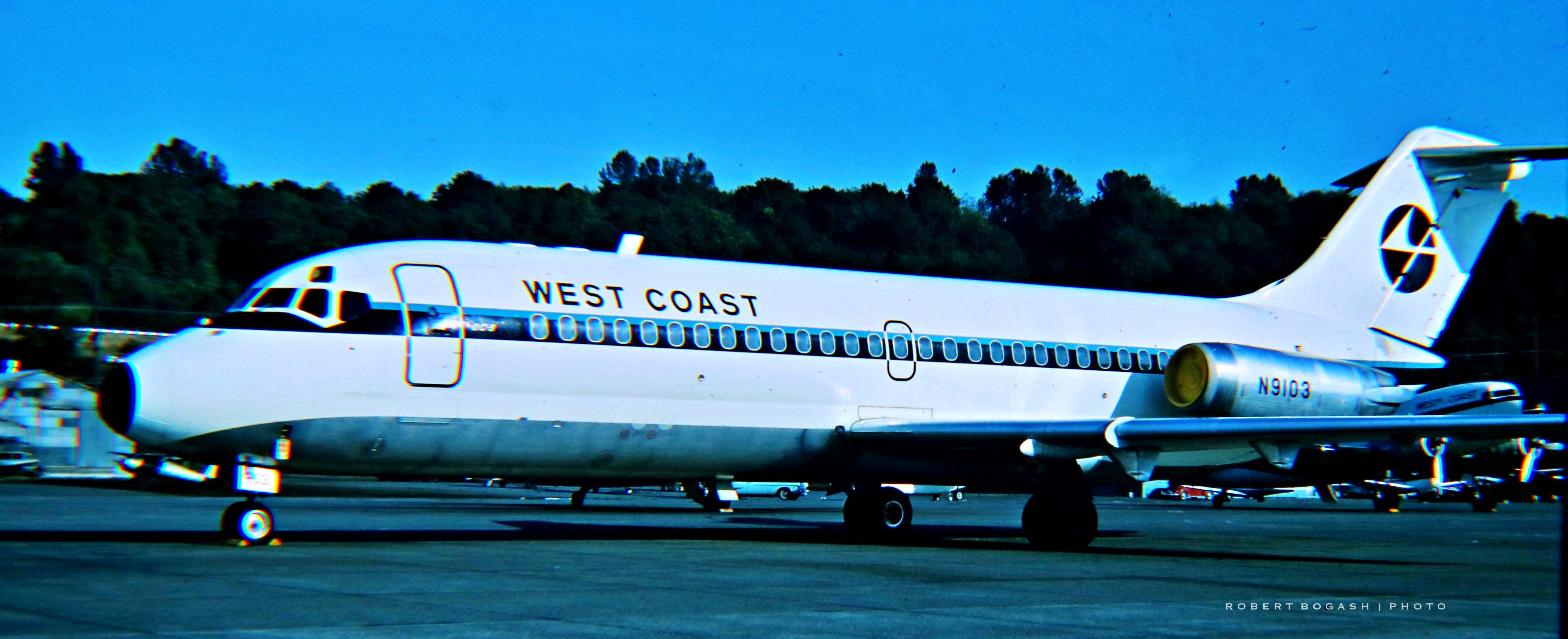 I made sure I was there when N9101, their first airplane arrived from the Douglas factory Sept 15, 1966, and took this picture of it. It turned out to be a very rare photograph 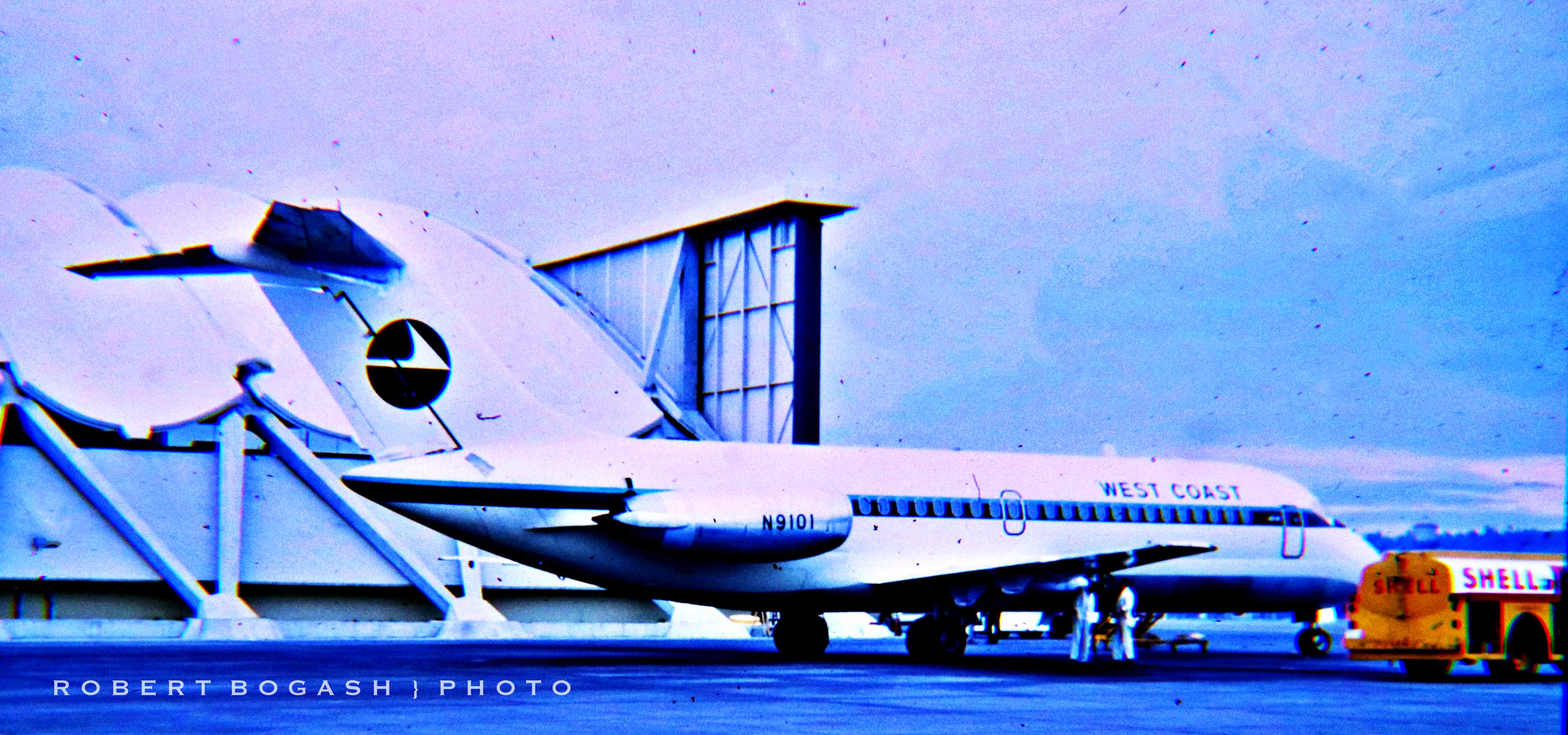 I was also there when it departed Boeing Field on Saturday 1 Oct 1966 for SFO on what turned out to be its final flight. An Historic Photograph. It had only been in service for 6 days when it crashed (CFIT) into a mountain about 10 miles SW of Mt Hood on approach into Portland. All 18 aboard were killed. It was the first loss of a DC-9 and the first fatal accident for the airline. 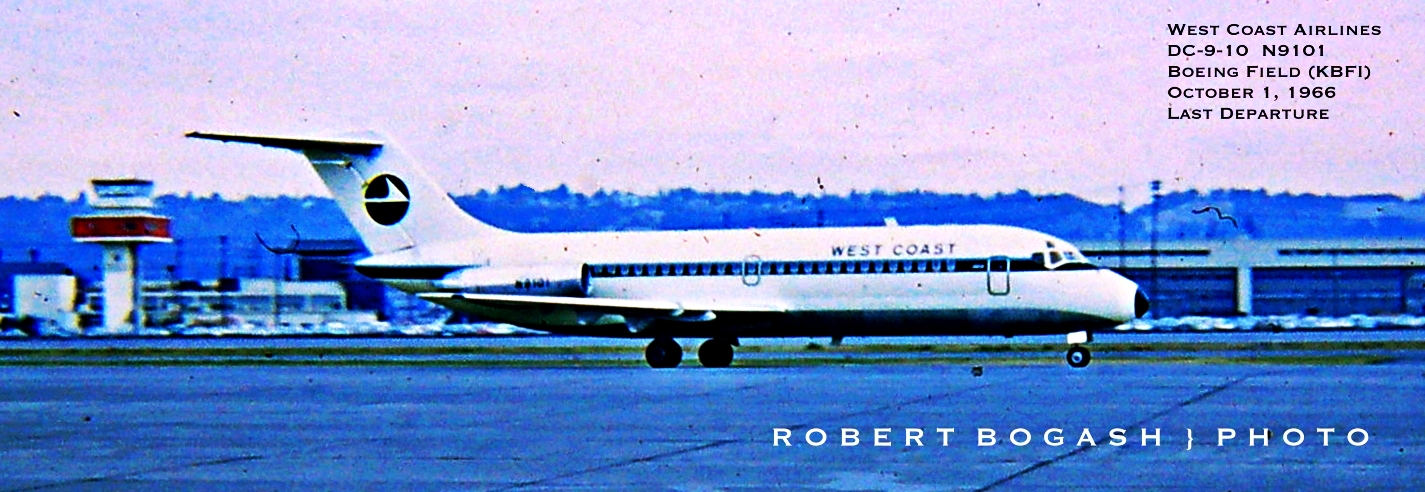 It's very sad to photograph an airplane and find out it is making its last flight. There are very few pictures of N9101 since it was brand new and only in service for a week. 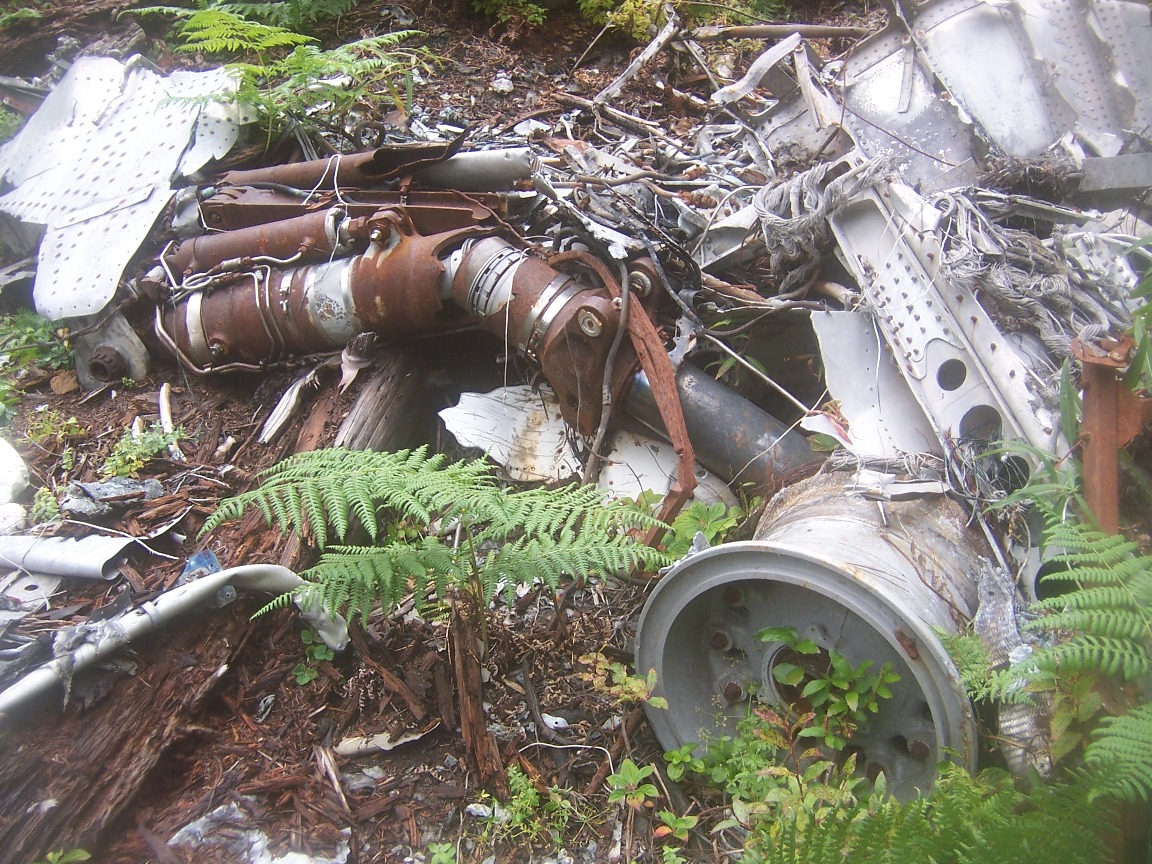
The flight crew were, as might be expected, high time but only new to the airplane. The Capt had about 19,000 hours but only 17 in the DC-9; the F/O had over 9500 hrs but only 9 in the DC-9. The flight was a Qualification Check Ride, but the Check Pilot only had 50 hours in the DC-9 himself. Cause of the accident was "Undetermined." **************
In April 1967, WCA announced they were
retiring their DC-3 fleet, and the last flight was purported to be the
last scheduled DC-3 flight in the U.S. Although I had tried to
snag a DC-3 flight (on West Coast) back in 1963, I had failed. For
an airplane fan not to have flown - ever - in a DC-3 was a grave sin,
in my opinion, so I bought a ticket on their last flight from Portland
to Seattle.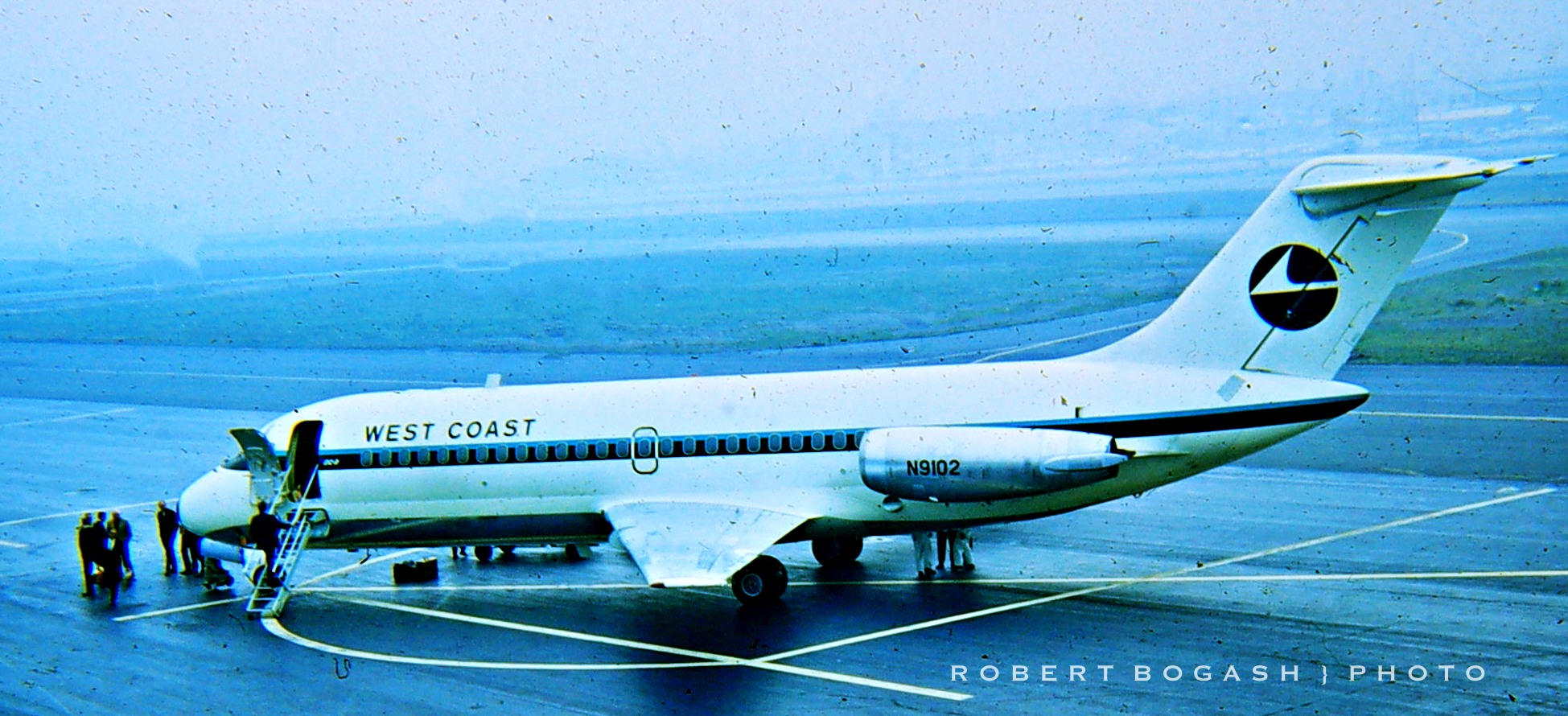 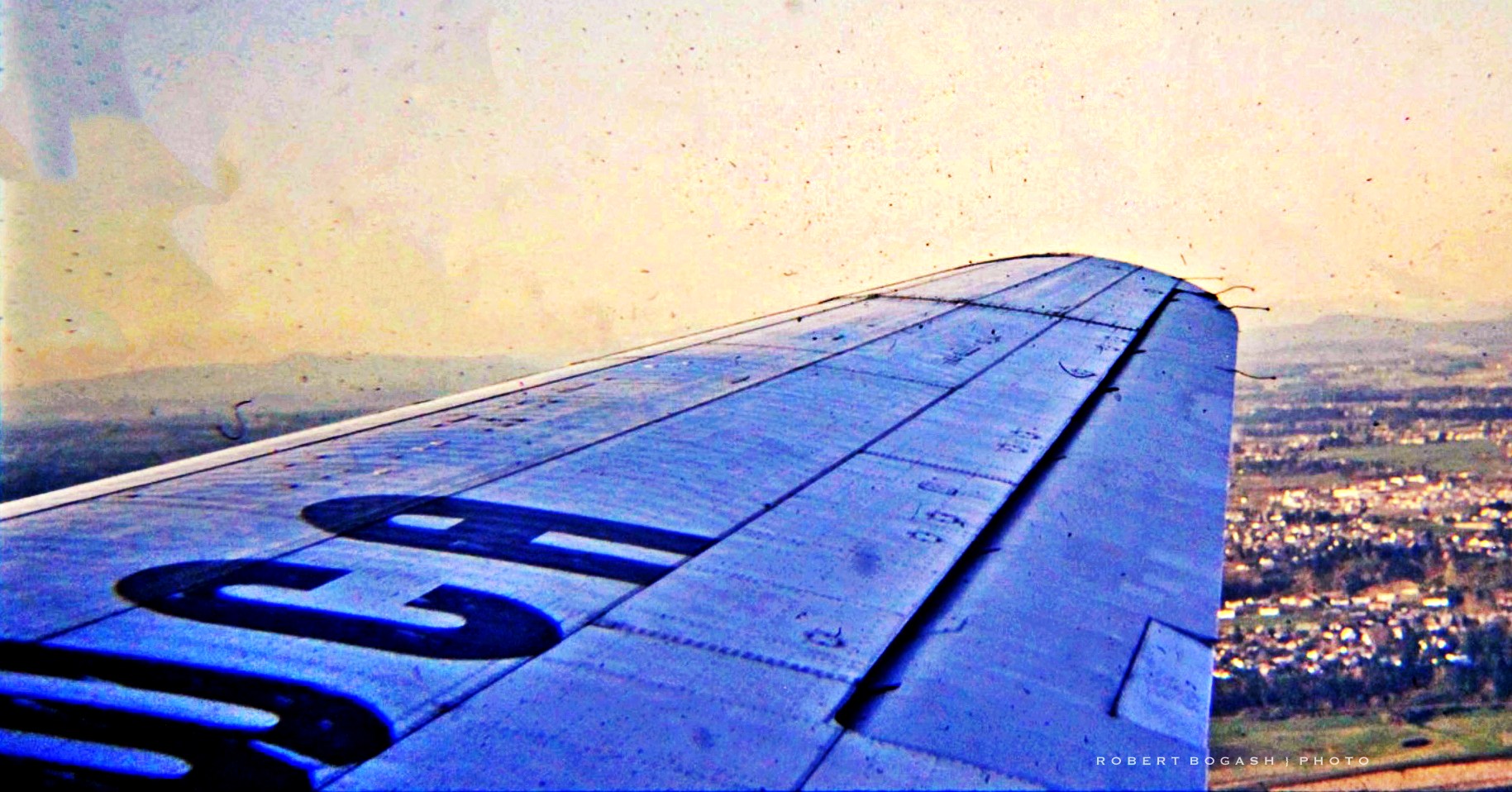 I was "fulfilled" - I'd flown on a DC-3. Not being able to see the future, I could not have foreseen the many DC-3 hours ahead of me when I began working and flying in Canada. On 7 Jun 1969, I got a 3:10 checkout in CF-HTH, including Air Work and 15 landings! Good thing my Boeing boss Andy Jones didn't know about my "extracurricular activities." **************
Out one night with my camera I caught some good shots of the past and the future.
 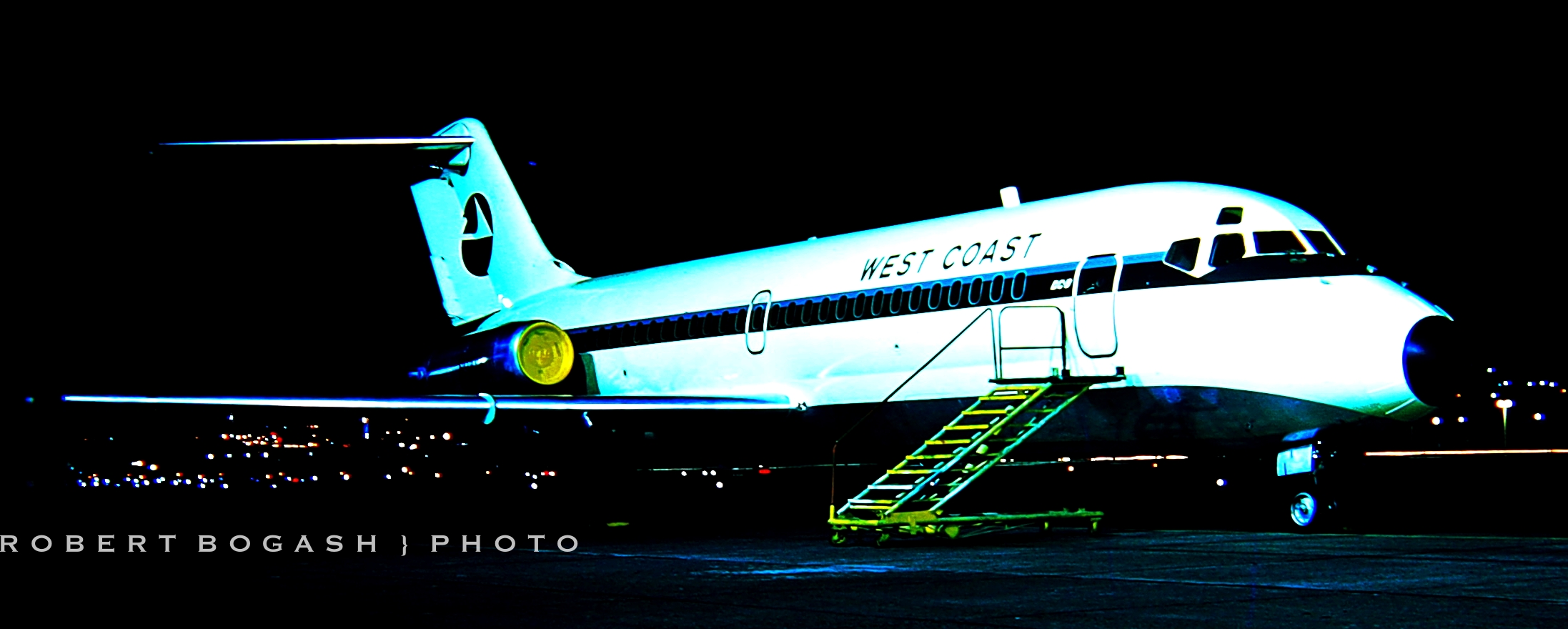 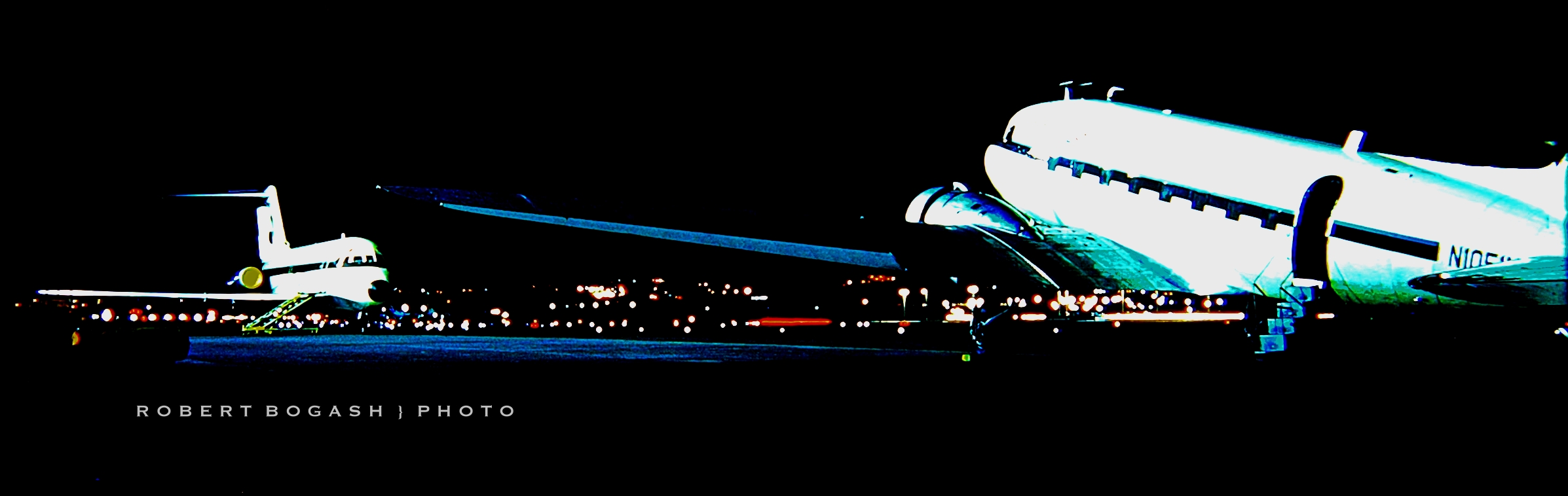 A quiet and dark night on the ramp in front of the West Coast hangar. Only me and two airplanes. The trusty old DC-3 looking down the ramp at her descendant - the DC-9. If only they could talk - I wonder what they're thinking.... Standard Airways
Standard Airways was a "Supplemental" carrier based in Seattle (?) It's story is way too convoluted for this photo page, but is folded into the Joel Eisenberg airline structure. For the purposes of this page, Eisenberg's Aero America picked up the operating certificate held by Standard Airways, which had been dormant for several years. Click here for some history Standard may have begun in 1946 in Seattle and San Diego, operated assorted DC-3 and later DC-6 aircraft, and in the 60s and 70s, had a fleet of 2 DC-9-10s and 2 707-138B's that had been acquired from Qantas of Australia. Standard History here. I photographed the two DC-9s - one at JFK and one at SEA - seen here.  JFK 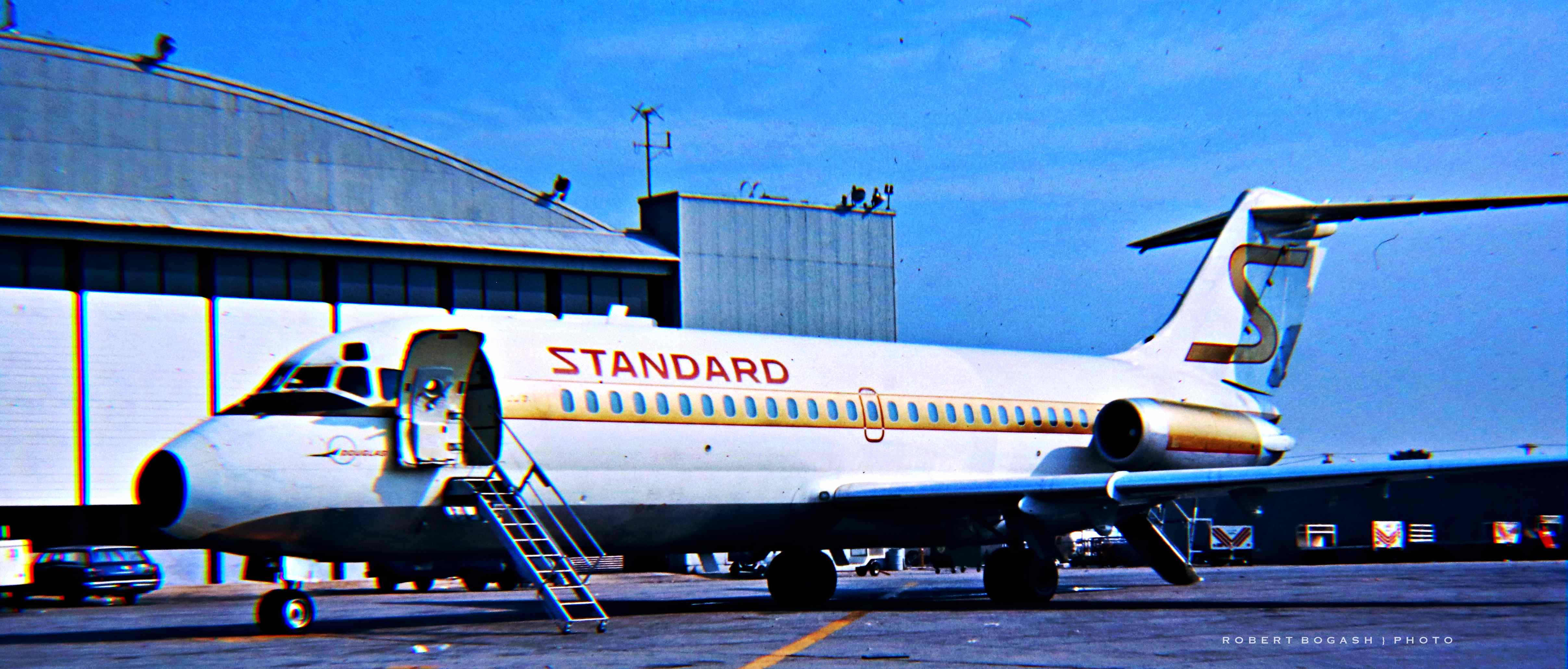 SEA The two 707s were N791SA and N792SA. There were only 13 -138s built, all for Qantas, and were the shortest of the 707 family, shorter even than the 720. 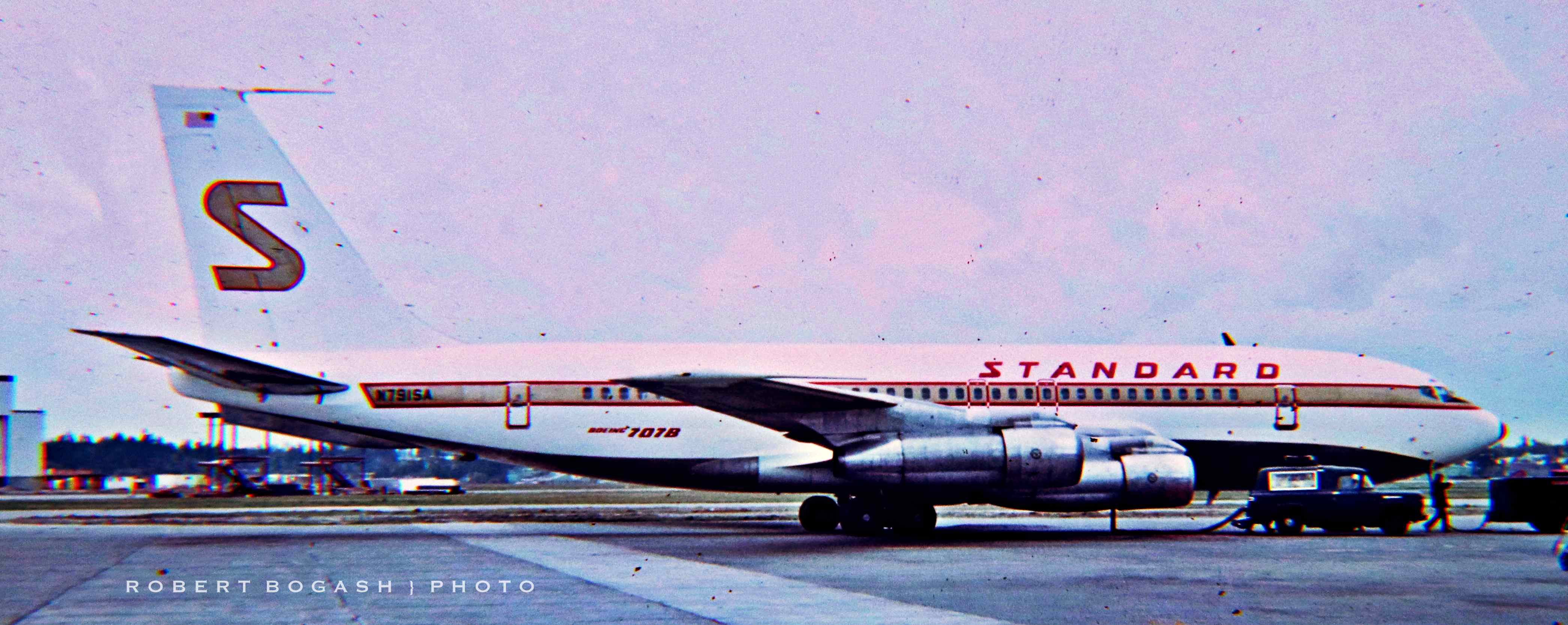 N791SA at SEA 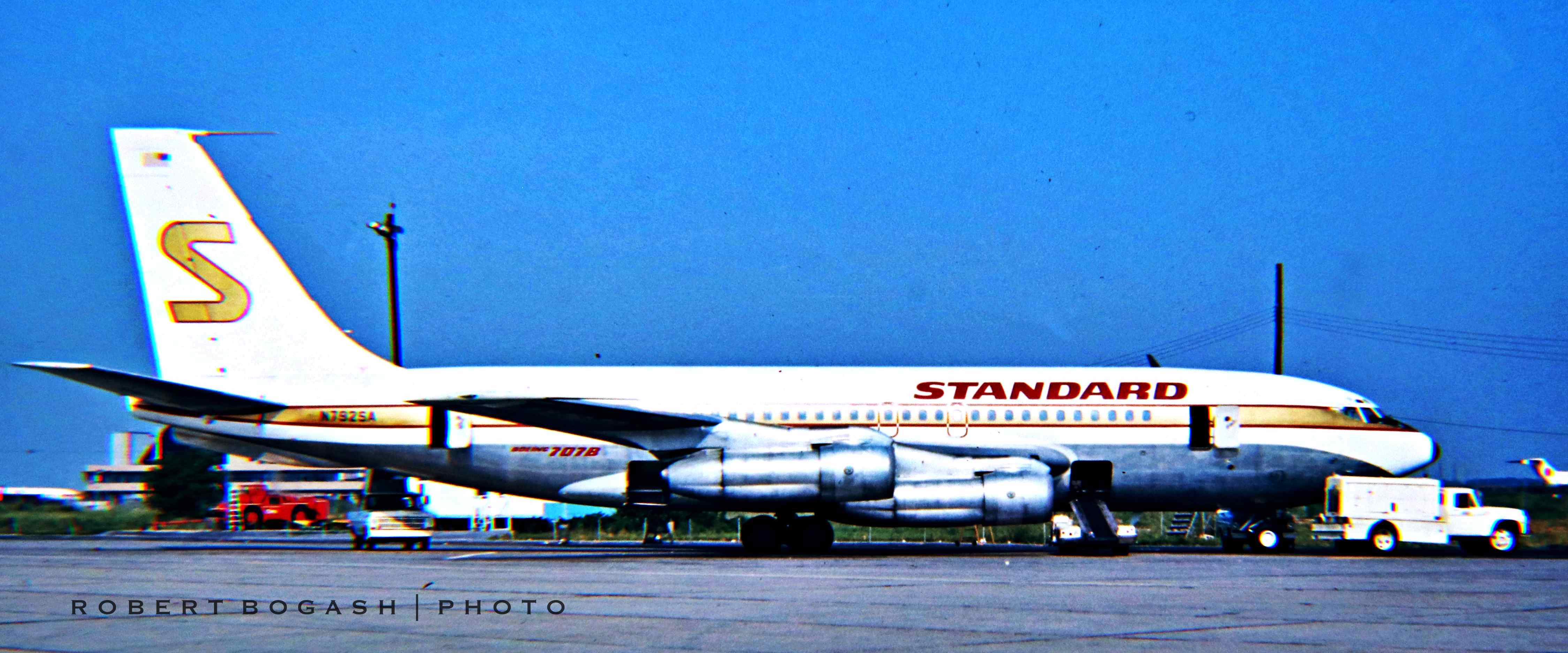 N792SA at SEA N791SA arrived one night at SeaTac and I was there for the arrival. Subsequently, it was wet-leased to Canadian Pacific - a DC-8 operator - who used it primarily on a shuttle operation between Vancouver and Honolulu, occasionally to Mexico City. 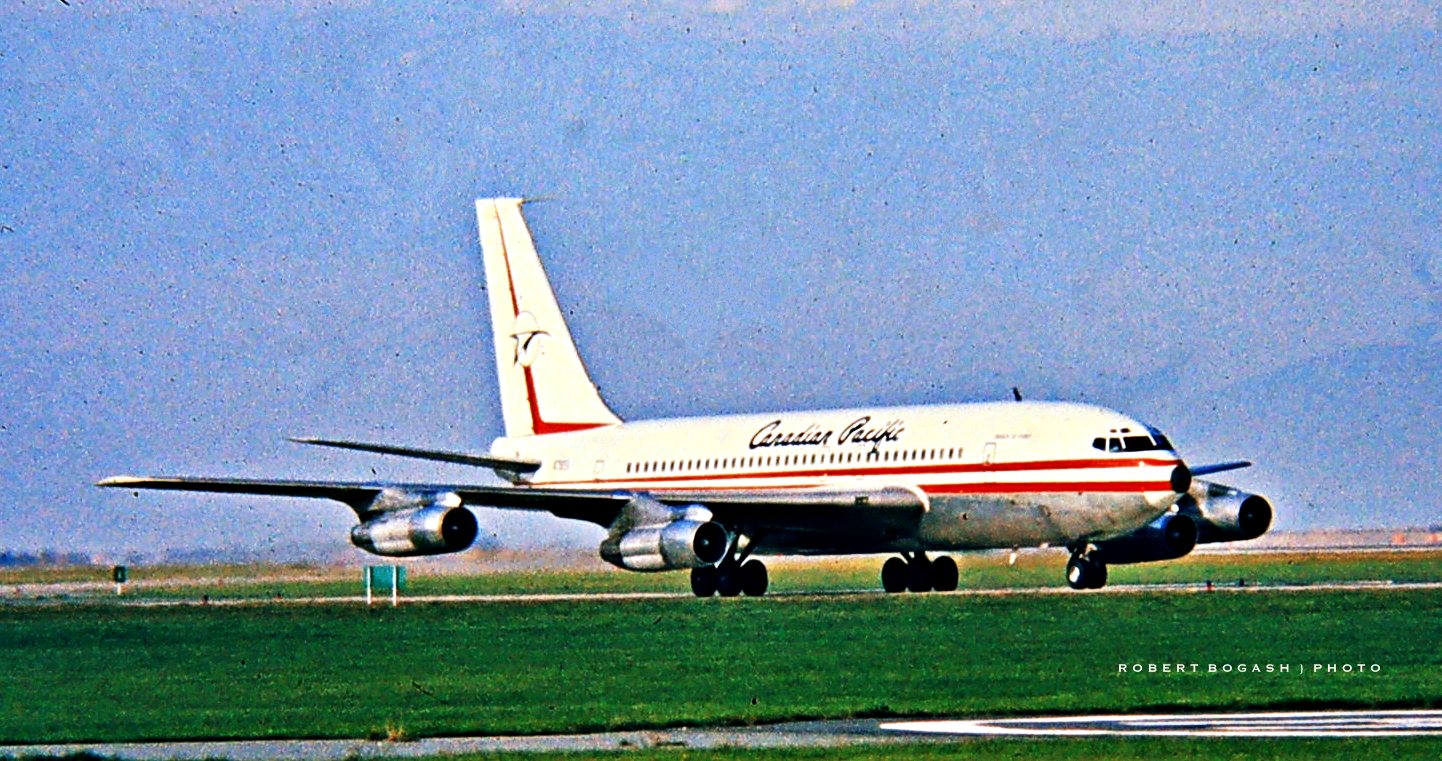 N791SA in CPA livery at YVR On a wet-lease, the aircraft owner provides all the operating infrastructure, including the airplane, flight crew, insurance and maintenance etc. The airplane was repainted into full Canadian Pacific colors and I photographed it several times at YVR. CPA provided the cabin crew, ground servicing, catering, and sold the tickets etc; the airplane retained its U.S. registry. The reason CPA entered into this lease was - the same as Seaboard World and their interim 707s - because of delays by Douglas in building and certifying the DC-8 Stretch series airplanes they had on order - they were short of lift. 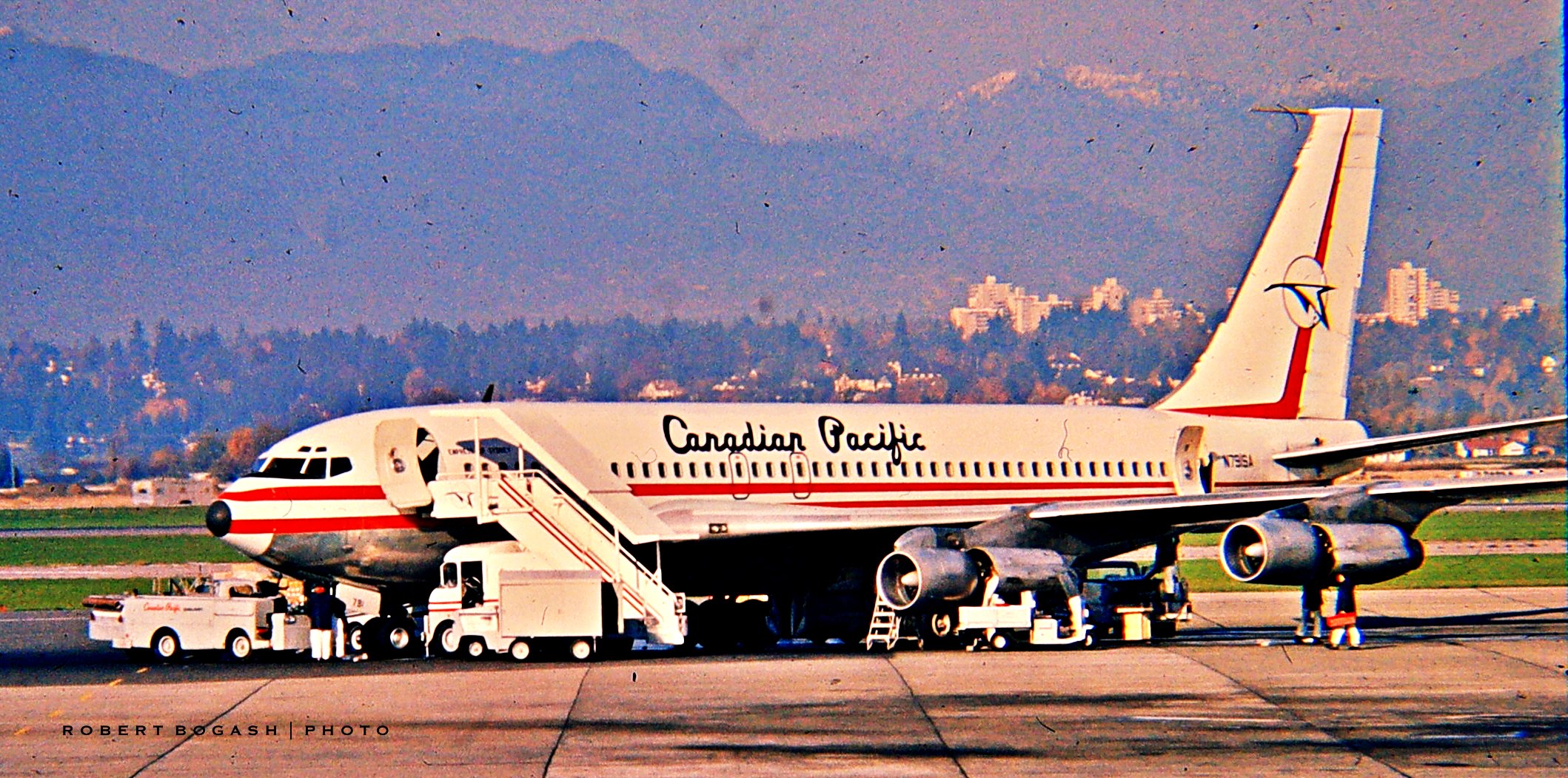 On the night of 7 Feb 1968, the airplane was returning from HNL, when it crashed at YVR, while trying to land in dense fog. It ran through a bunch of smaller airplanes and equipment and hit an airport building, nearly crashing into the main terminal. There were two fatalities (the Purser and an airport worker in the struck building) and the airplane was written off. 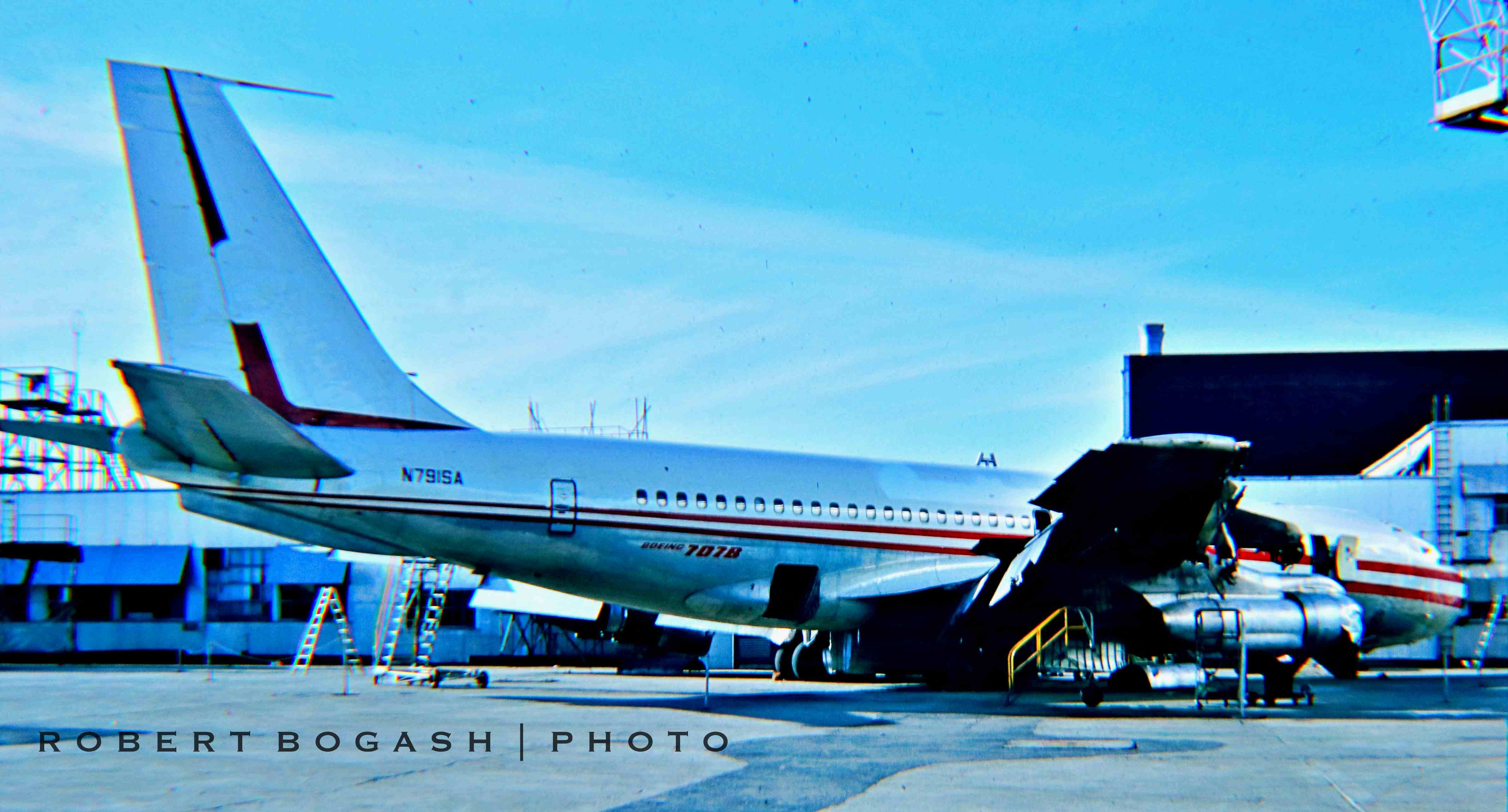 First action after a wreck - get out there and paint out the company markings! 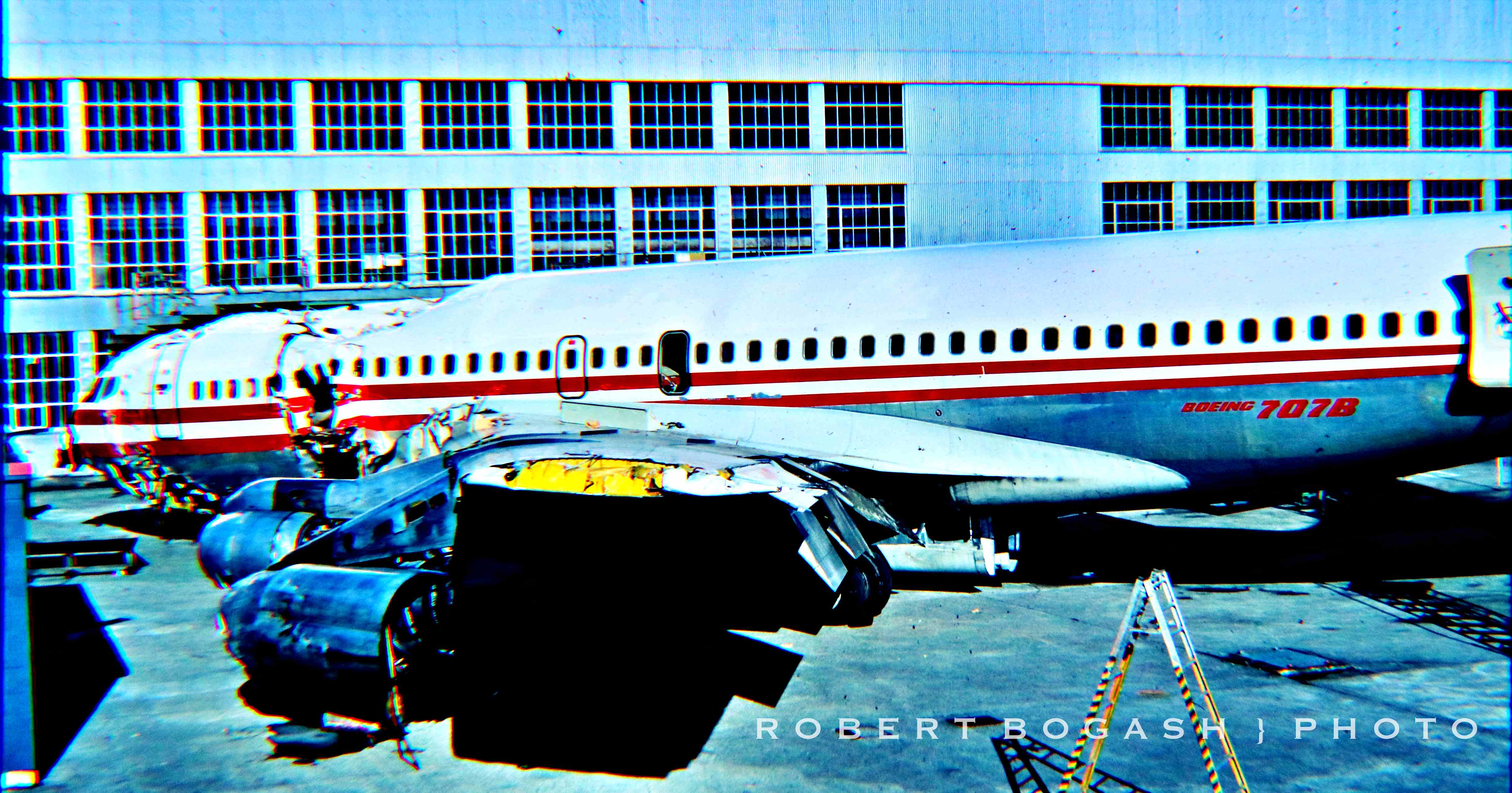
Either I (or Ted Gibson) photographed it some time later. One story has the hulk being loaded on a barge and brought down to Everett where it was parted out, and some say it may still be on that barge (but I never saw it during innumerable boat trips around the Everett area.) Standard Airways ceased operations sometime later - perhaps due to this accident - and its operating certificate later went to Aero America. Aero America
Based at Boeing Field, here are two photos I captured in Honolulu.  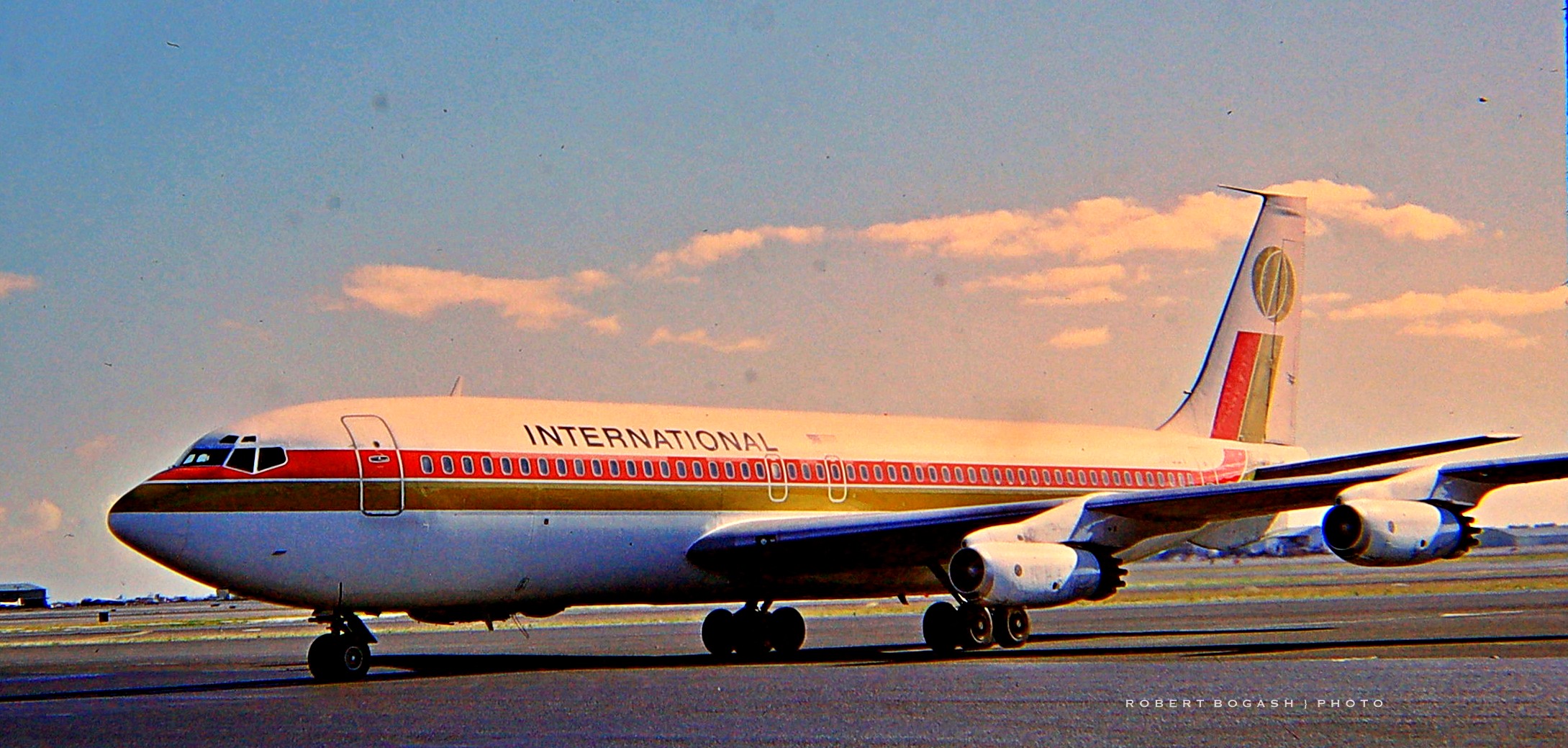 This airplane broke its Nose Gear landing in HNL, and I participated in a remarkable temporary repair that allowed a ferry back to BFI for a permanent Boeing repair. That story still in my future. Pacific Northern Airlines
PNA was a pioneer Alaska air carrier founded in 1934 by Art Woodley. It was acquired by Western Airlines in 1967. In 1943 it tried changing its name to Alaska Airlines, but this fell through as the other Alaska Airlines (and the Alaska Airlines of today) acquired the name. In the mid-1960s, they operated DC-3s, Connies and Boeing 720s.  PNA had a hangar next to Alaska at SeaTac 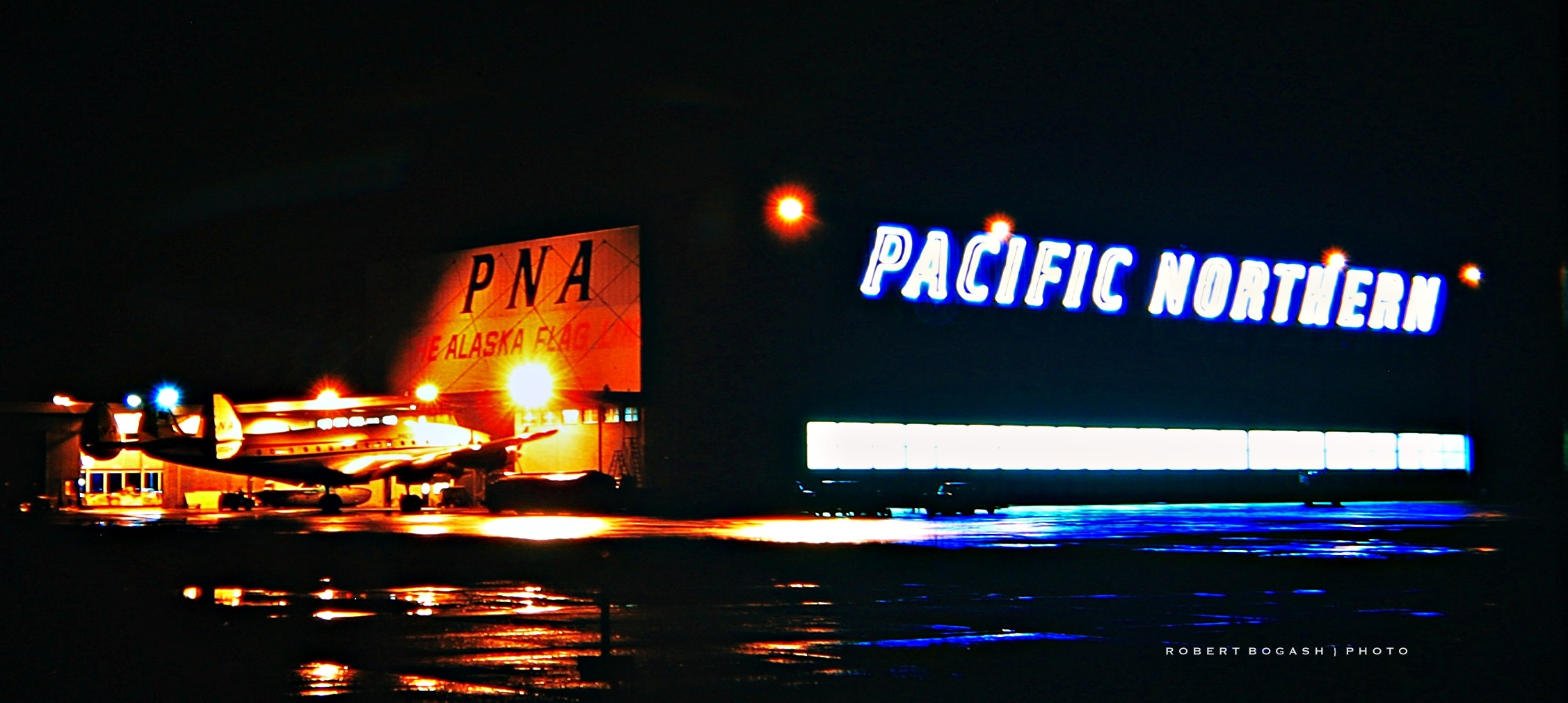    Boeing chartered PNA Connies for P.R. photo shoots. 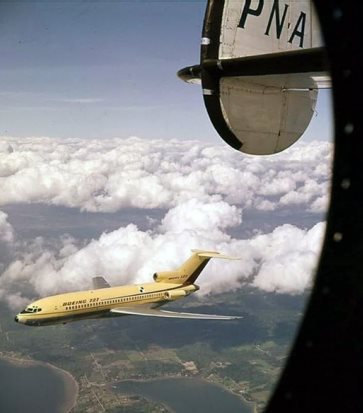 Here's the First Flight of the 727 from a PNA Connie. 9 Feb 1963 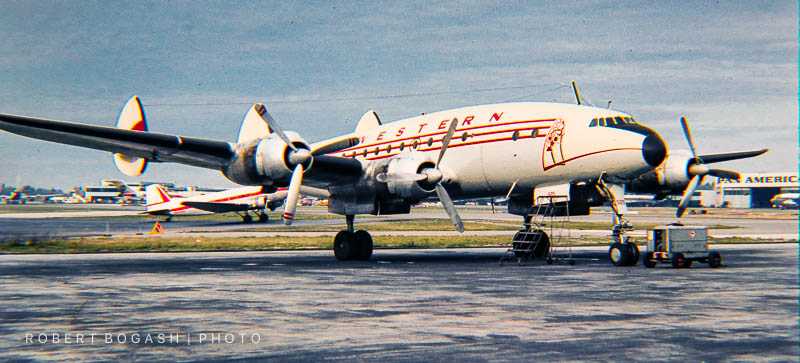 Western retained the Connies after the merger 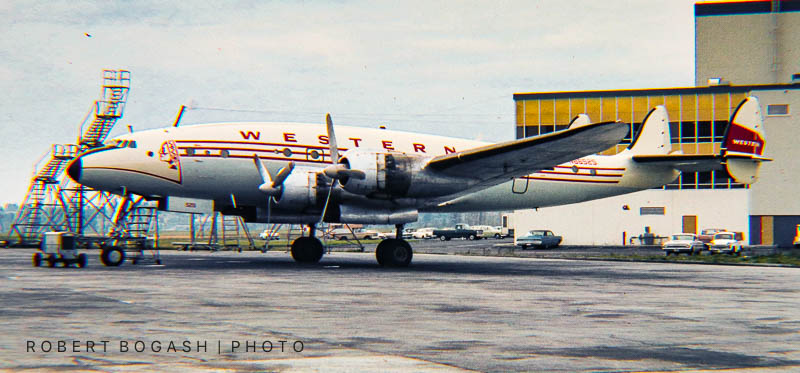 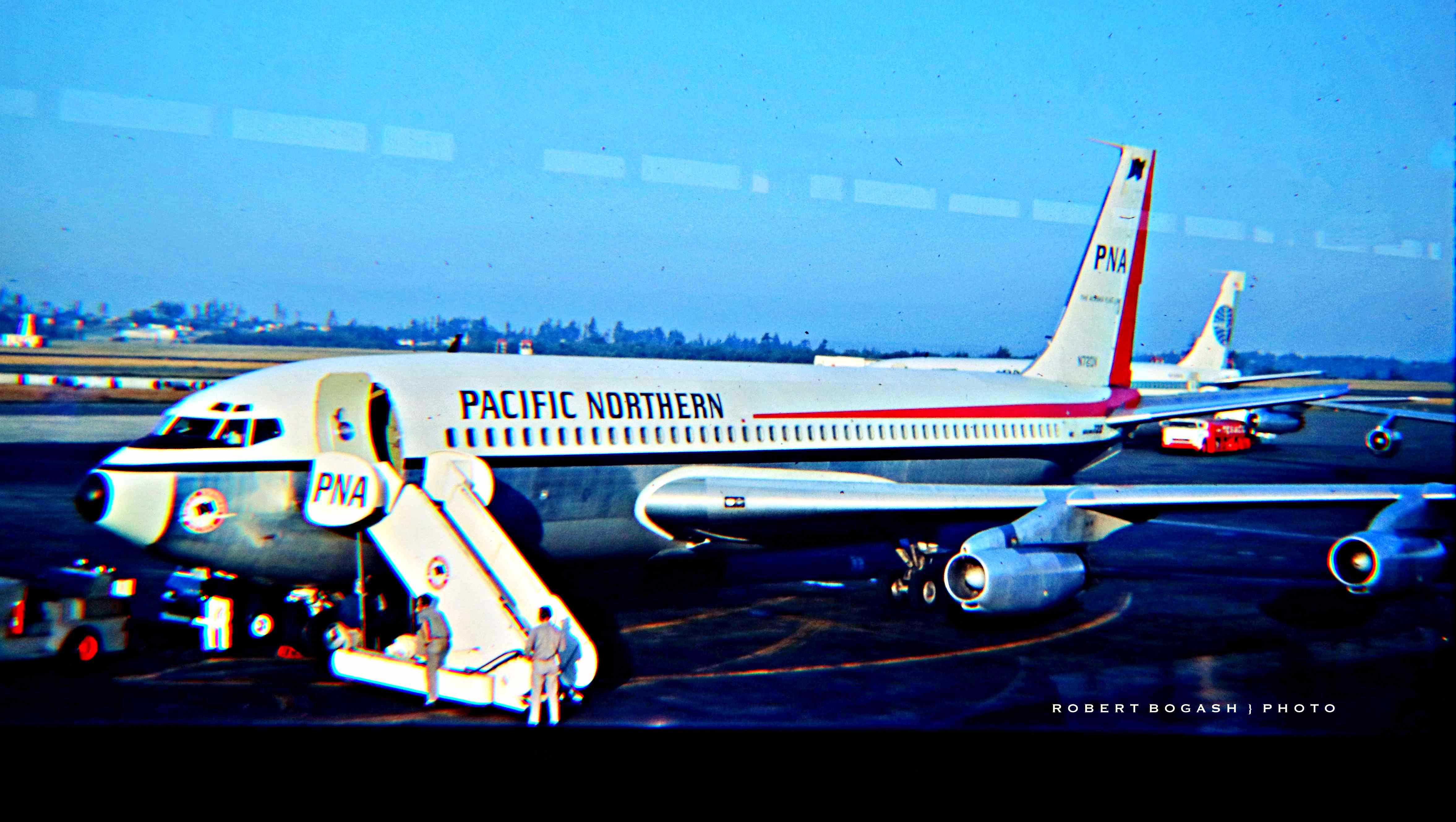 PNA bought 2 new build 720s from Boeing 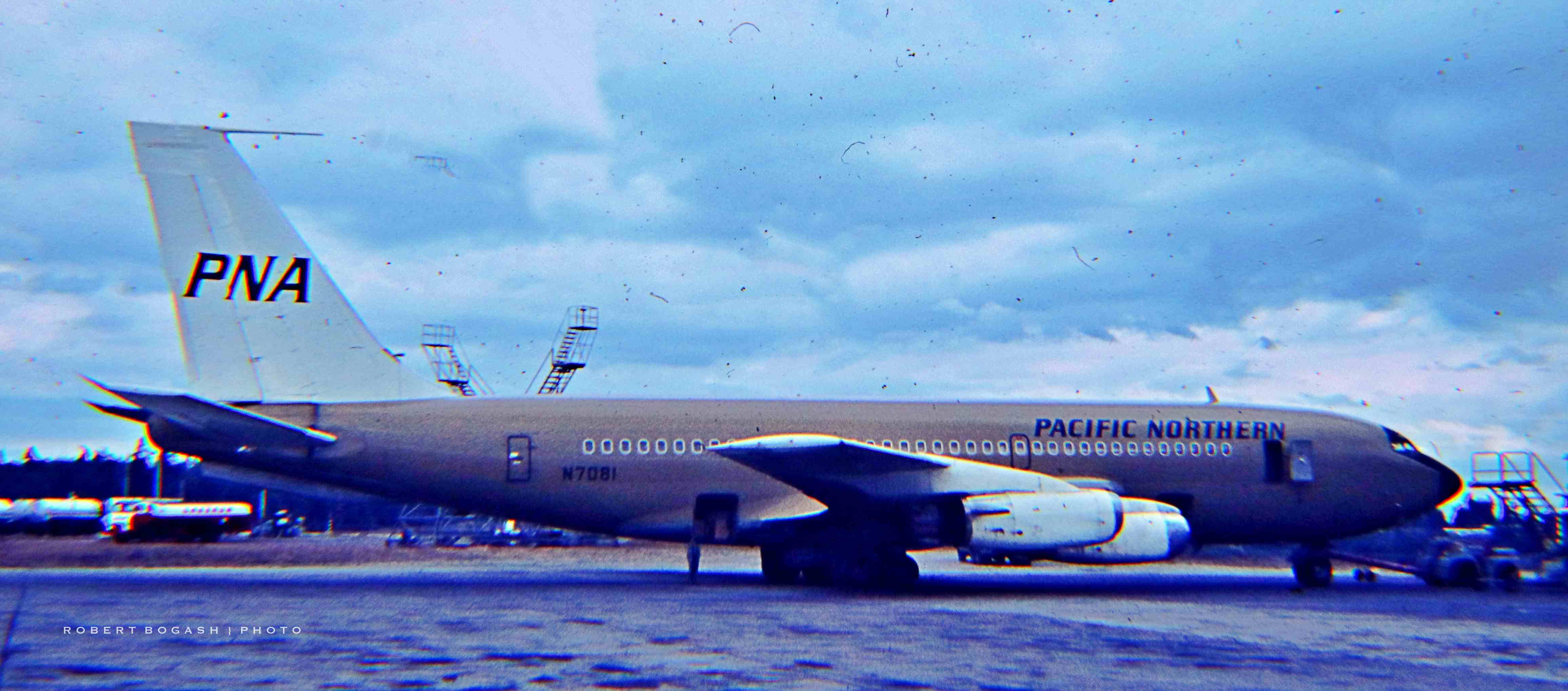 ...and acquired a third from Braniff (ex-Aer Lingus)  Western retained all three 720s after the merger Departing from Seattle, their first stop was often Ketchikan. Ketchikan had no airport. Annette Island PNA operated into the Annette Island Airport; a new airport was built near Ketchikan (across the Tongass Narrows) in 1973 after PNA was no more. Annette Island was built by Pan Am during WW II for the military and Pan Am served the airport for many years, including with 707 equipment. 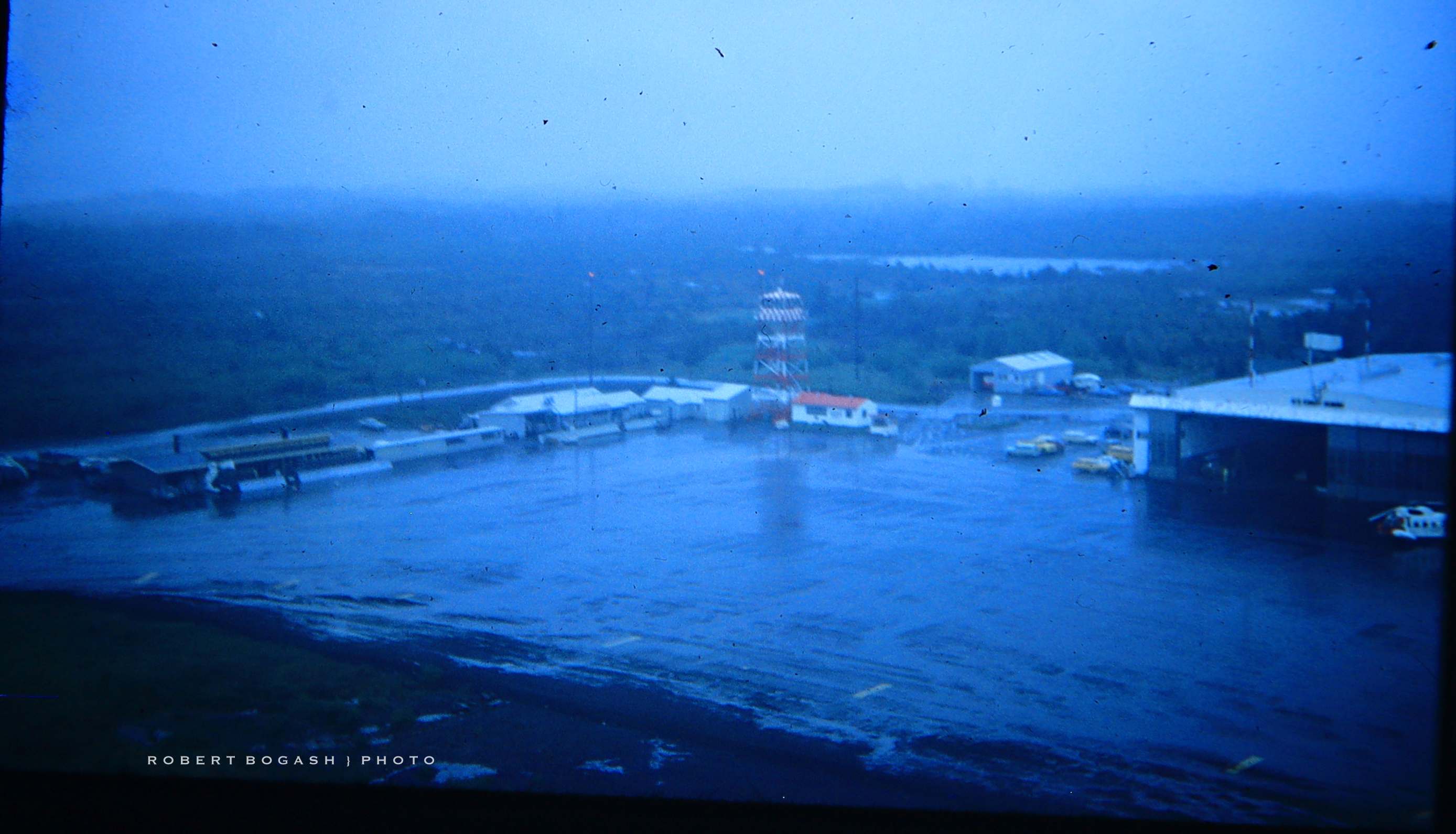 Ketchikan is one of the rainiest and gloomiest places on earth!  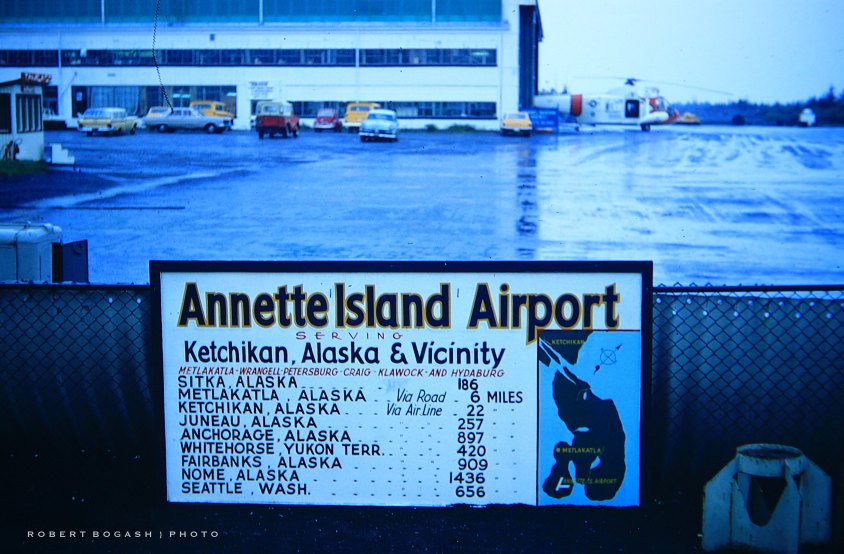 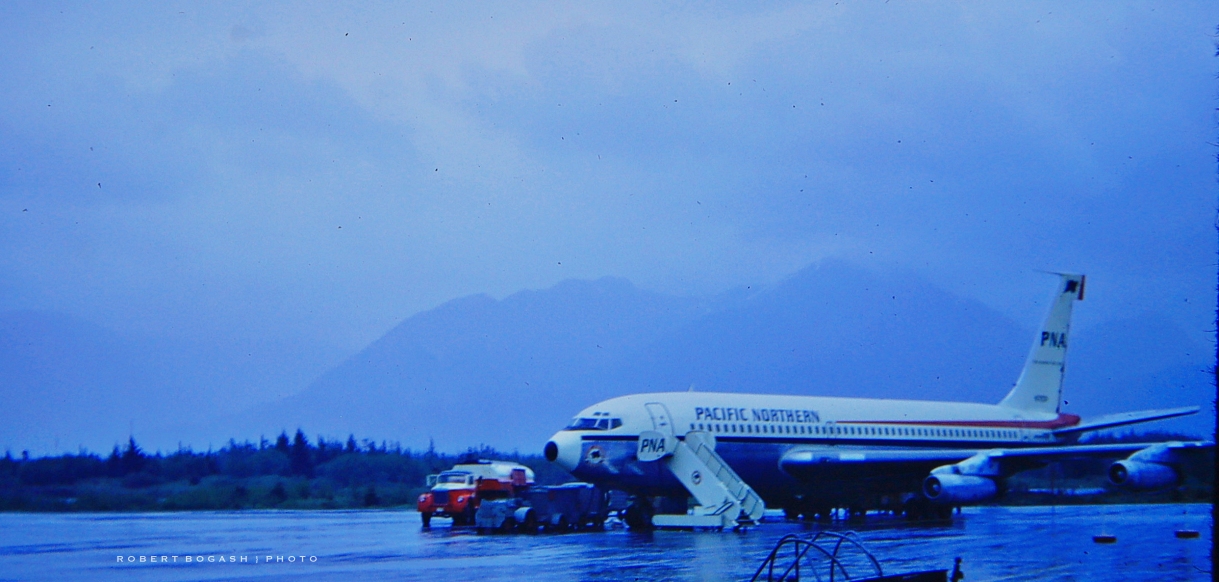 PNA 720 on the ground in Ketchikan  Service to Ketchikan itself was provided by Grumman Goose and PBY airplanes that shuttled from the airport to the Ketchikan waterfront; they were operated by Alaska-Coastal, Ellis, and other operators.  Grumman Goose  The old Goose leaked like a sieve in the rain - and on the water. Two big bath towels were essential equipment in the front end.  PBY 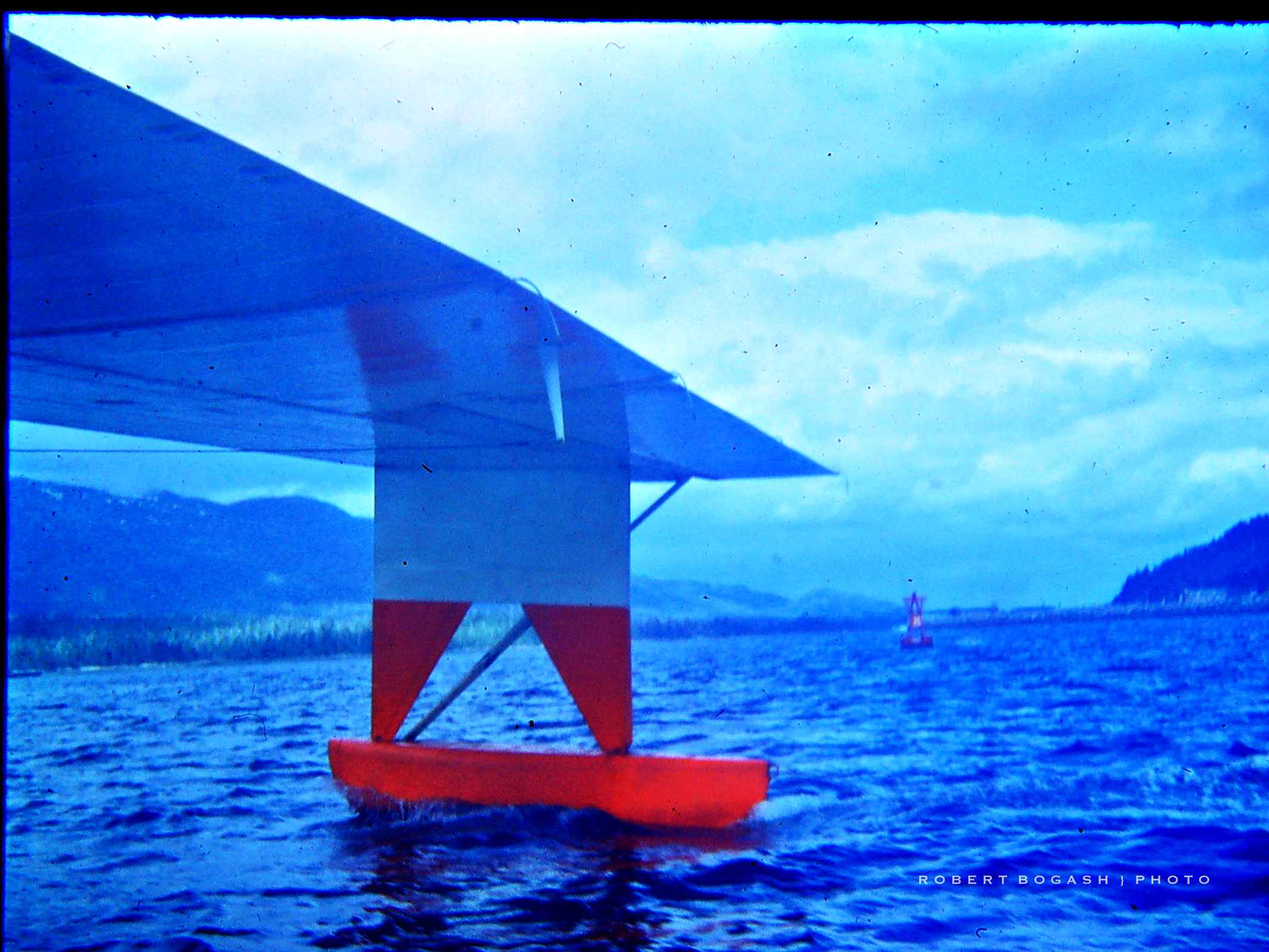 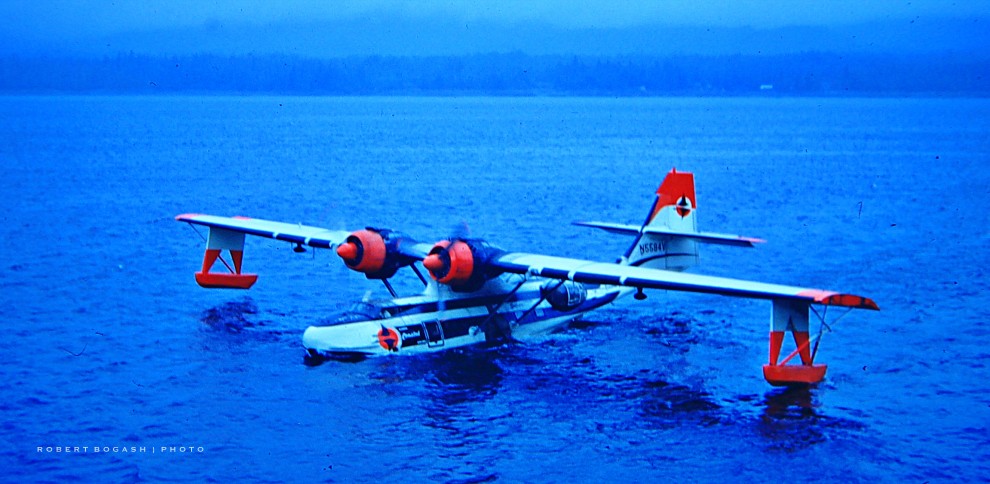  Ketchikan was touted as being "3 blocks high and 3 miles wide."  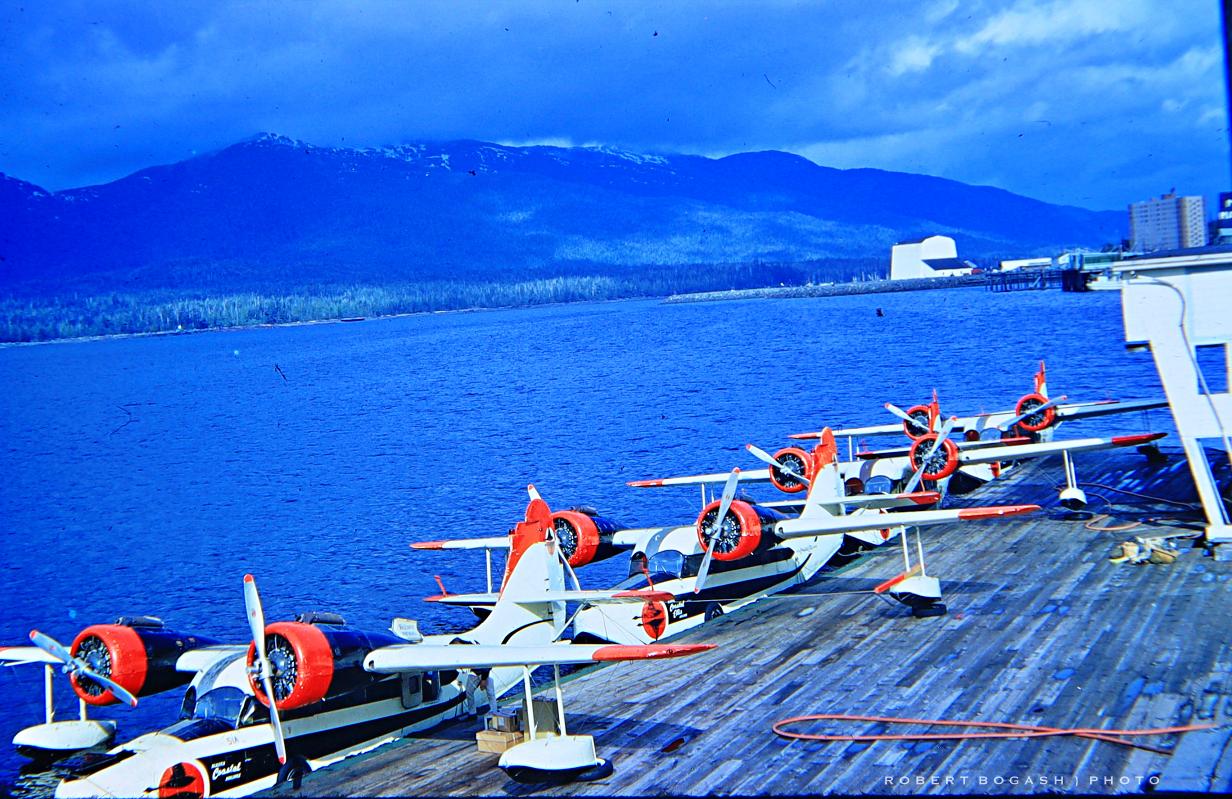 Gooses (Geese?) awaiting pax for Annette Island and other Alaska Panhandle destinations.  A Turbo-Goose! 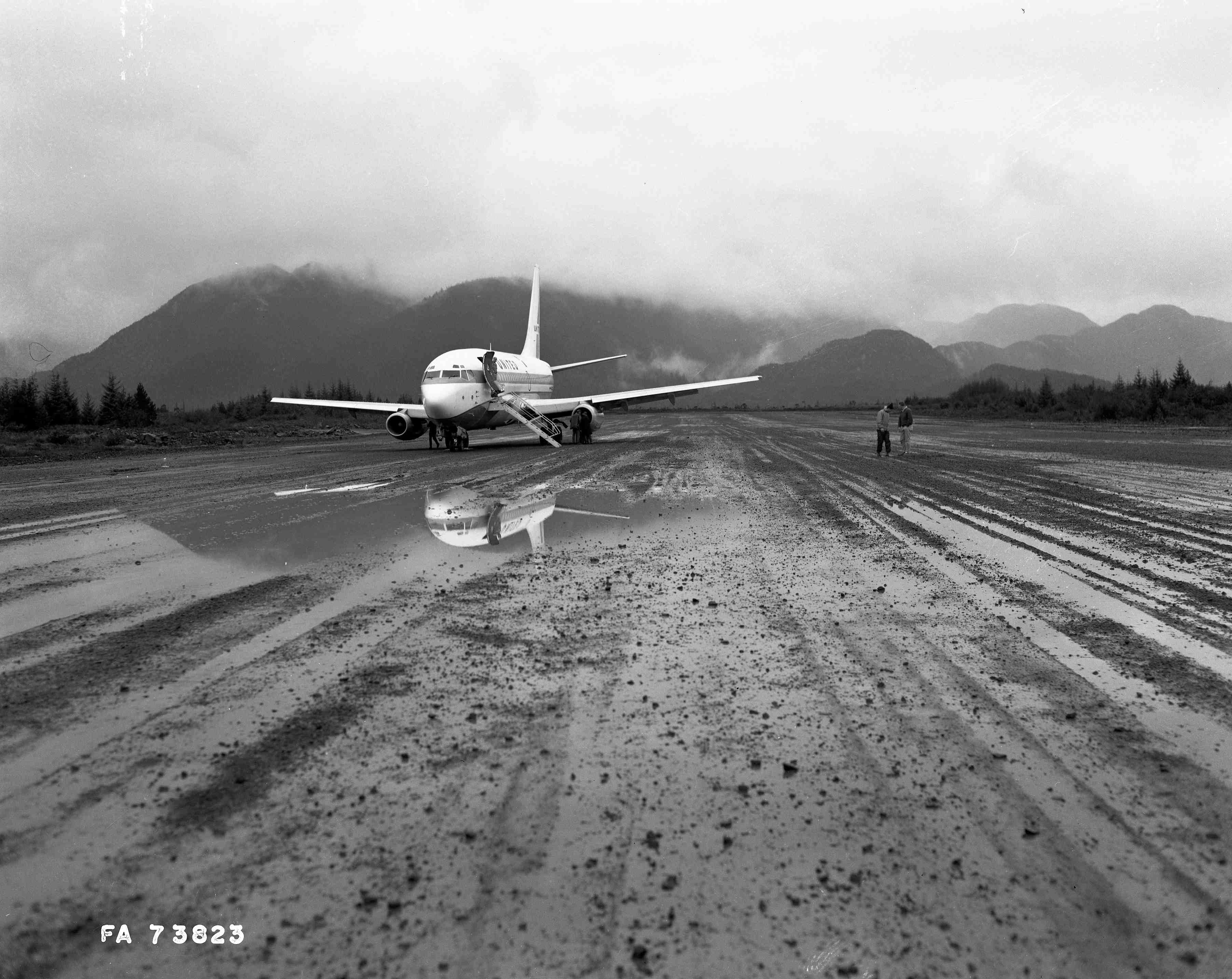  PNA 720 at Juneau Alaska Airlines
Alaska Airlines, founded in 1932 as a bush operation, is the only one of the Seattle based airlines to have both survived and prospered. Along the way, it created a lot of photo ops for guys like me who enjoyed taking pictures of their (very) varied equipment roster.  Alaska is the only one of the airlines in this photo essay that is still extant. Over the years, Alaska has operated a smorgasbord of different types. 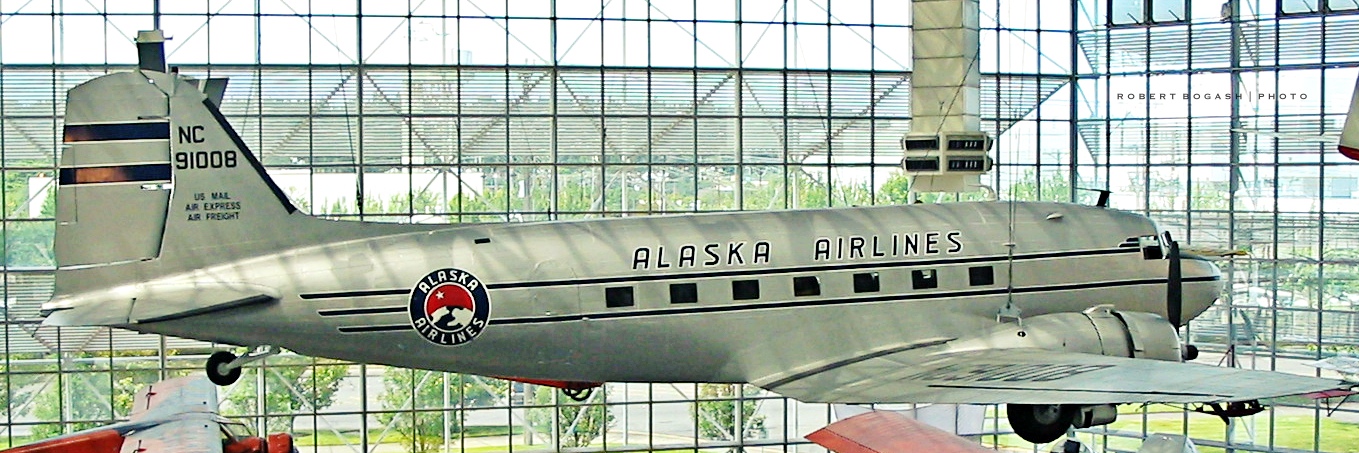 DC-3 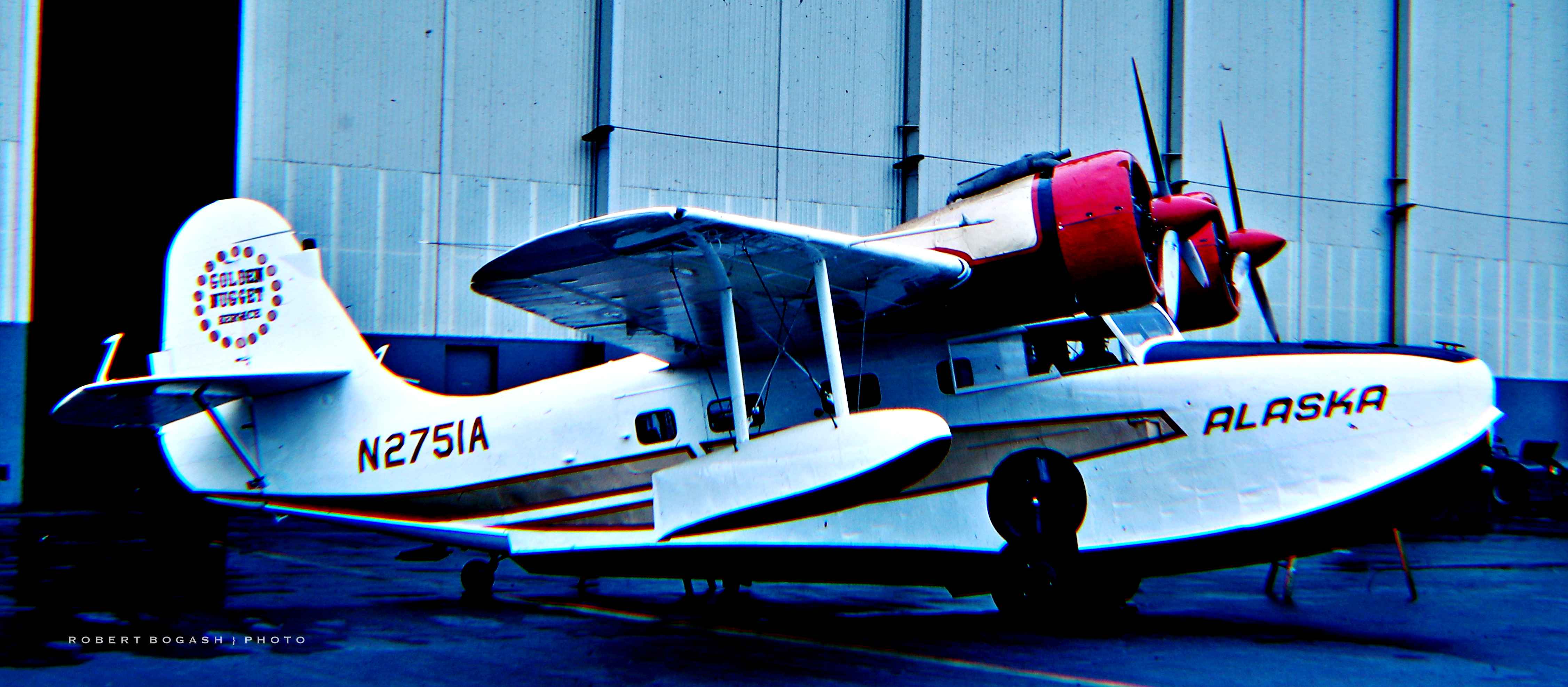 Grumman Goose - taken outside hangar at SEA  Convair 240 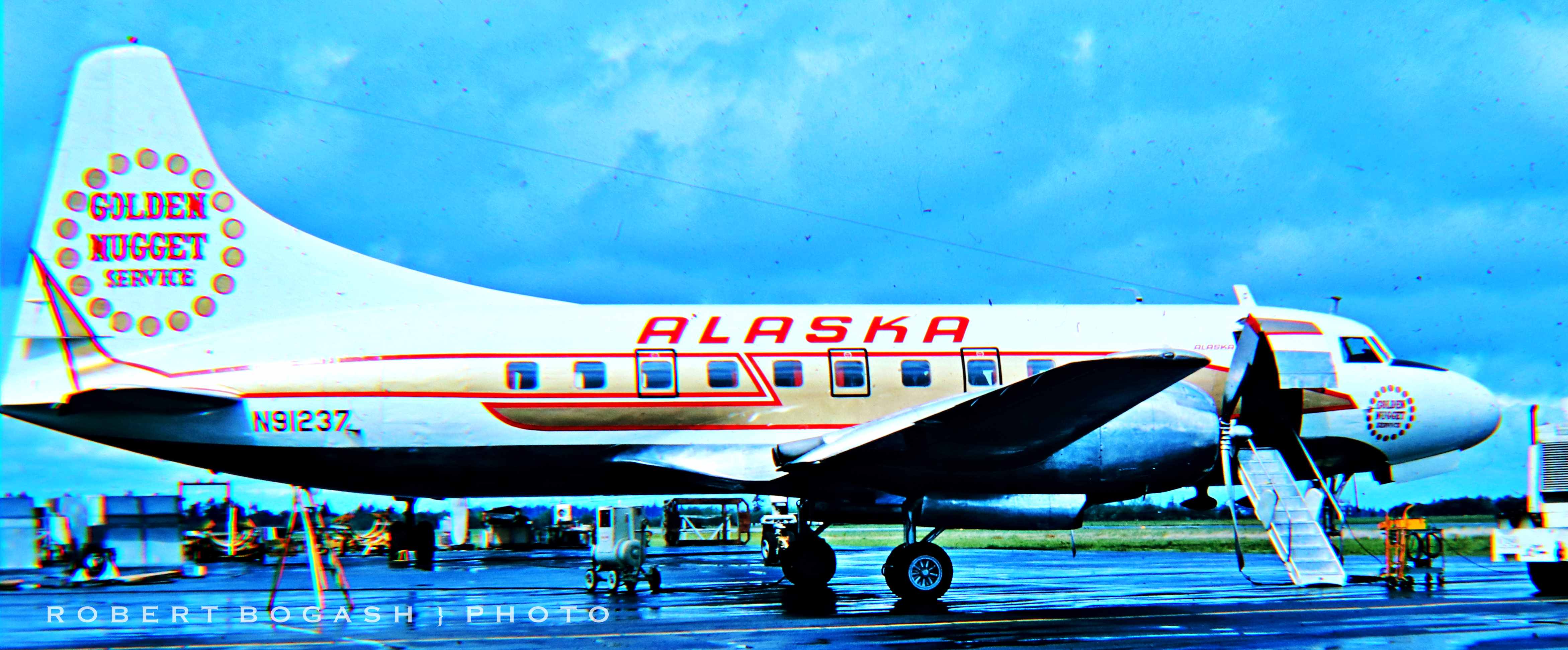 N91237 was written off in an accident when it ditched following engine failure after take-off from San Juan, Puerto Rico - 24 Sept 1998 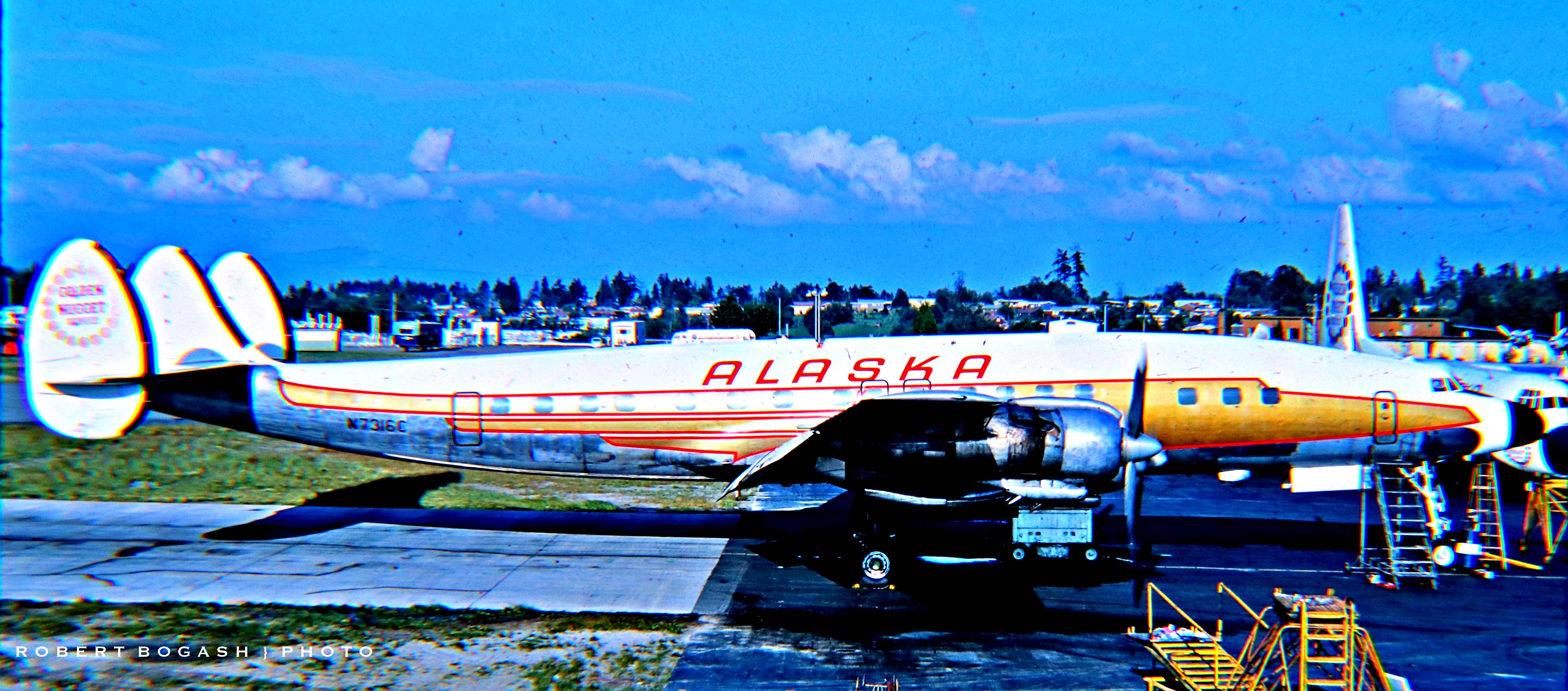 Alaska operated an assortment of Lockheed Constellations including several L-1649's, like these here.  N7316C is also still extant, with Lufthansa.   Funny - well maybe not so funny - funny how you can cross paths with certain airplanes over the years. Take this airplane below - N8083H. 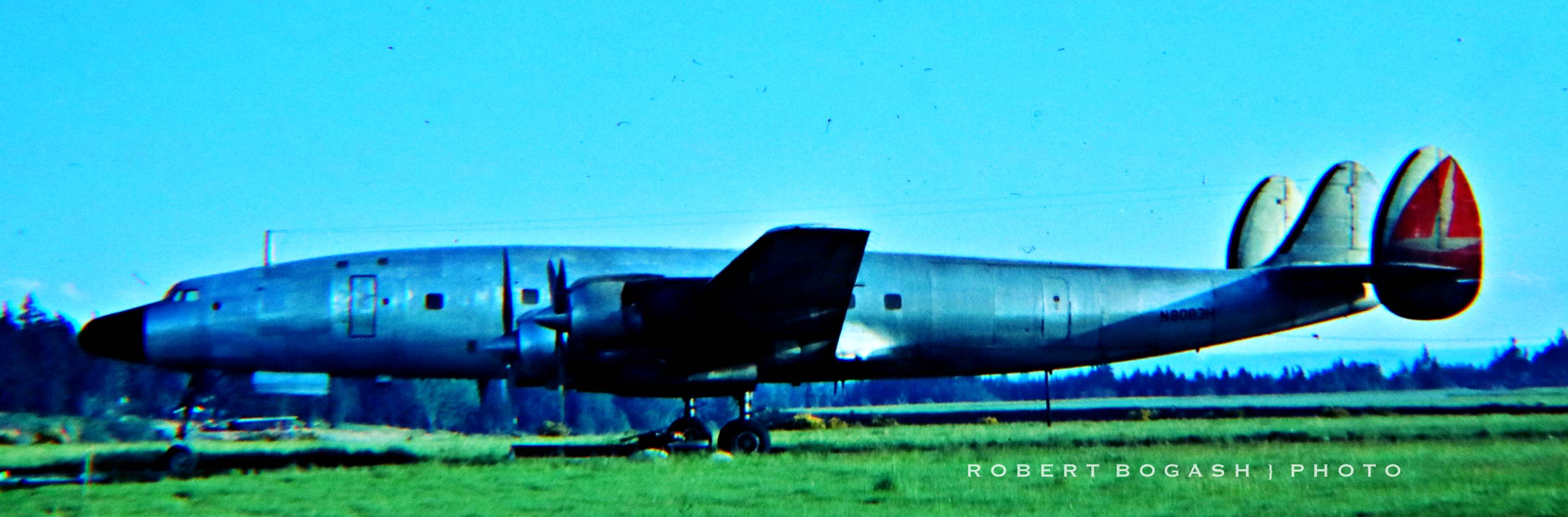 I shot this picture at SeaTac in 1966 while it was with Alaska. 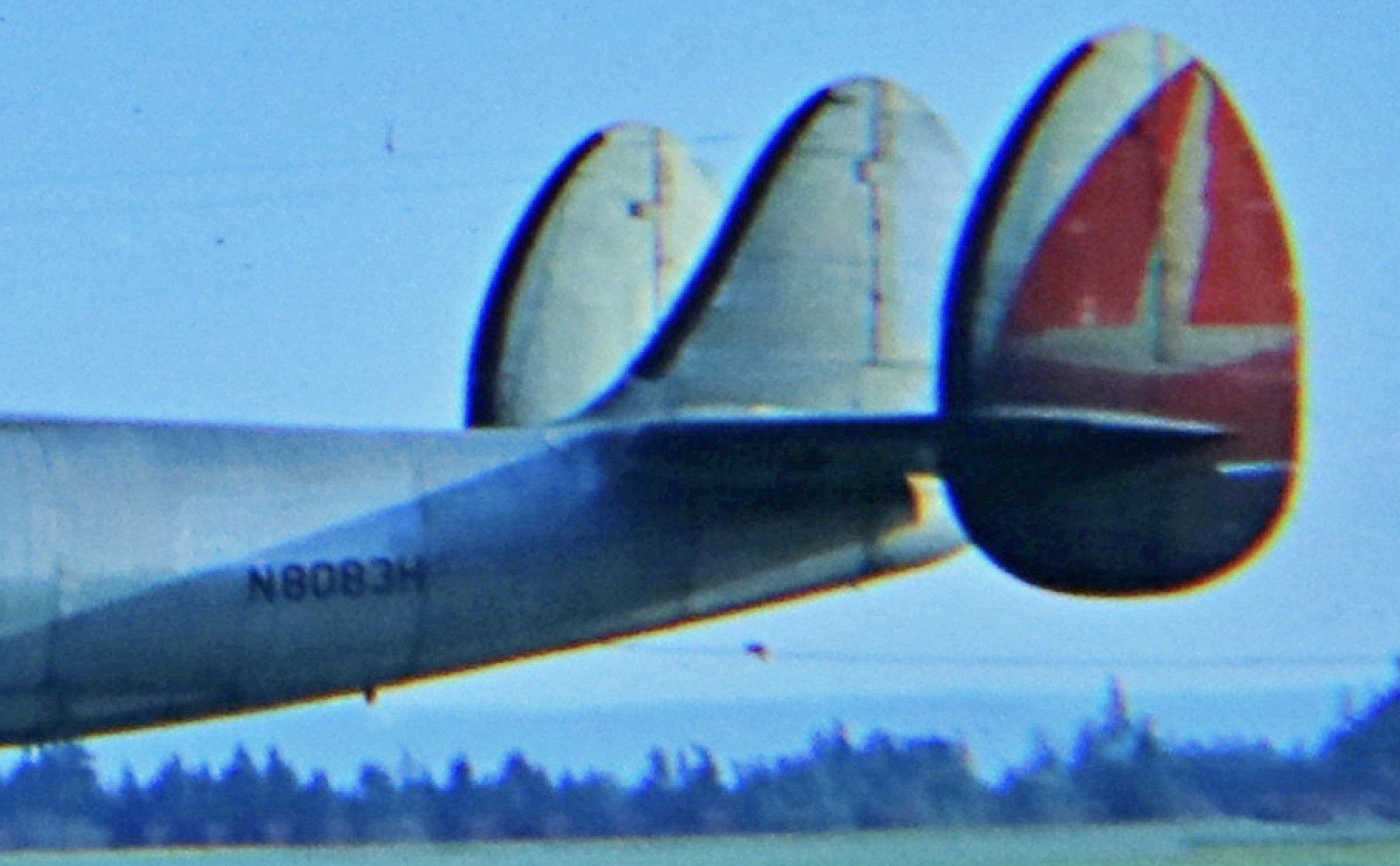 However, I first crossed paths with this airplane in 1959 when I photographed it at Idlewild in New York. It was then operated by TWA. 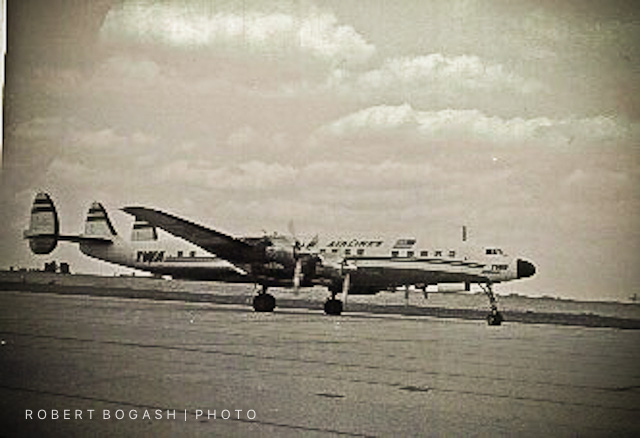 And my third encounter was in 2017 when I received a contract from a hotel company to find and restore a Connie for a new hotel project at Idlewild (now JFK International.)  The airplane I found
was a derelict parts queen in Auburn, Maine that was on the verge of
being scrapped. It was being used by Lufthansa to restore another
airplane. Lufthansa had requested Boeing assistance during a 747
Sales campaign 10 years earlier, and Boeing had asked me to assist, even
though I was retired. Eventually, three airplanes were acquired,
with the intention of making one good one. Story here.
 Truth be told, I
didn't make the tail number connection until much later when I was
reviewing old photographs. Still, there was this airplane, and
here was me - 15 years old in the beginning and in my 70s at the
end. Pretty sad shape, eh?
You can see the restored airplane in front of the old TWA JFK Terminal - and here's what she looks like now!!!! Crown Jewel at one of the World's Great Airports 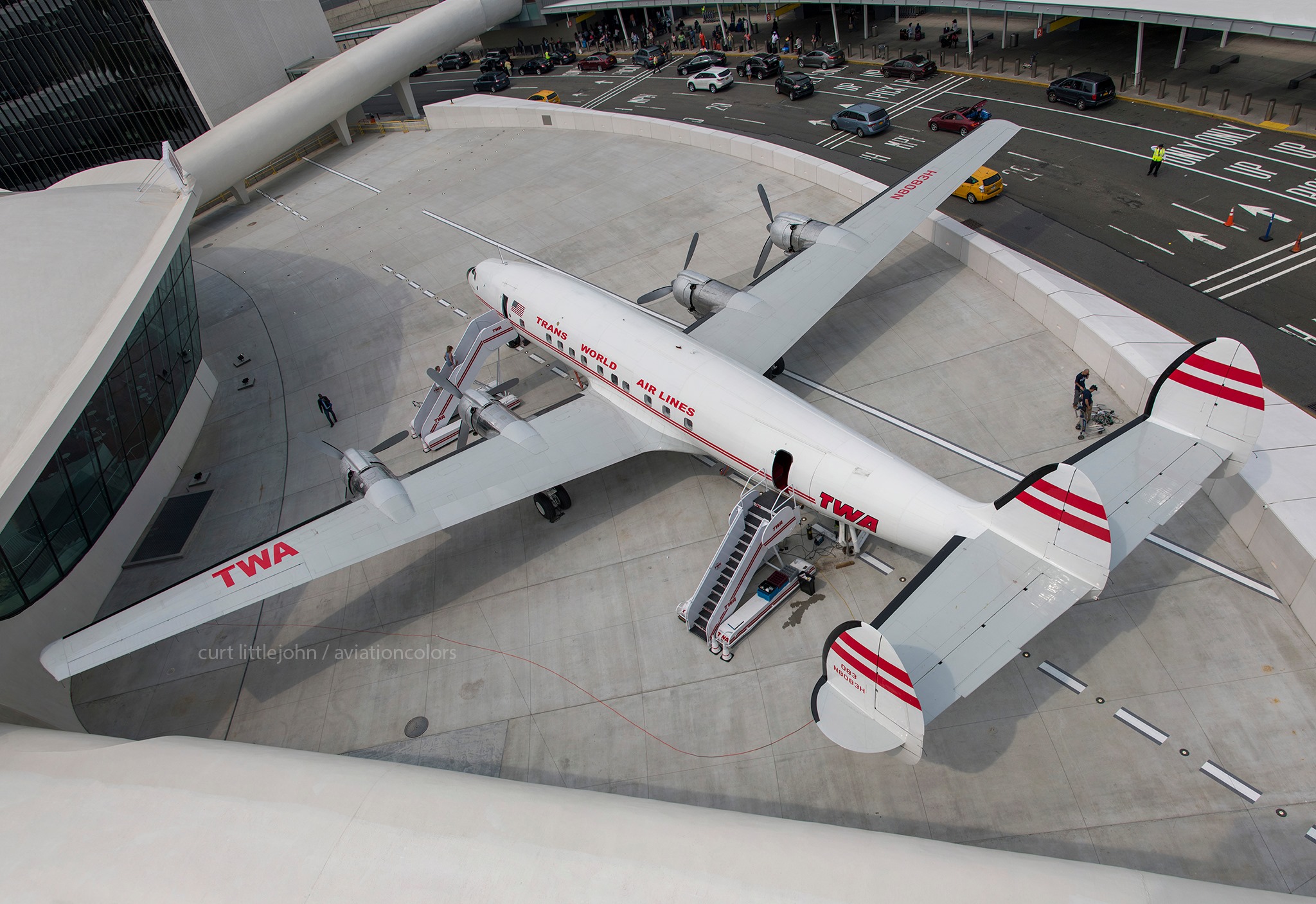 Photo by Curt Littlejohn 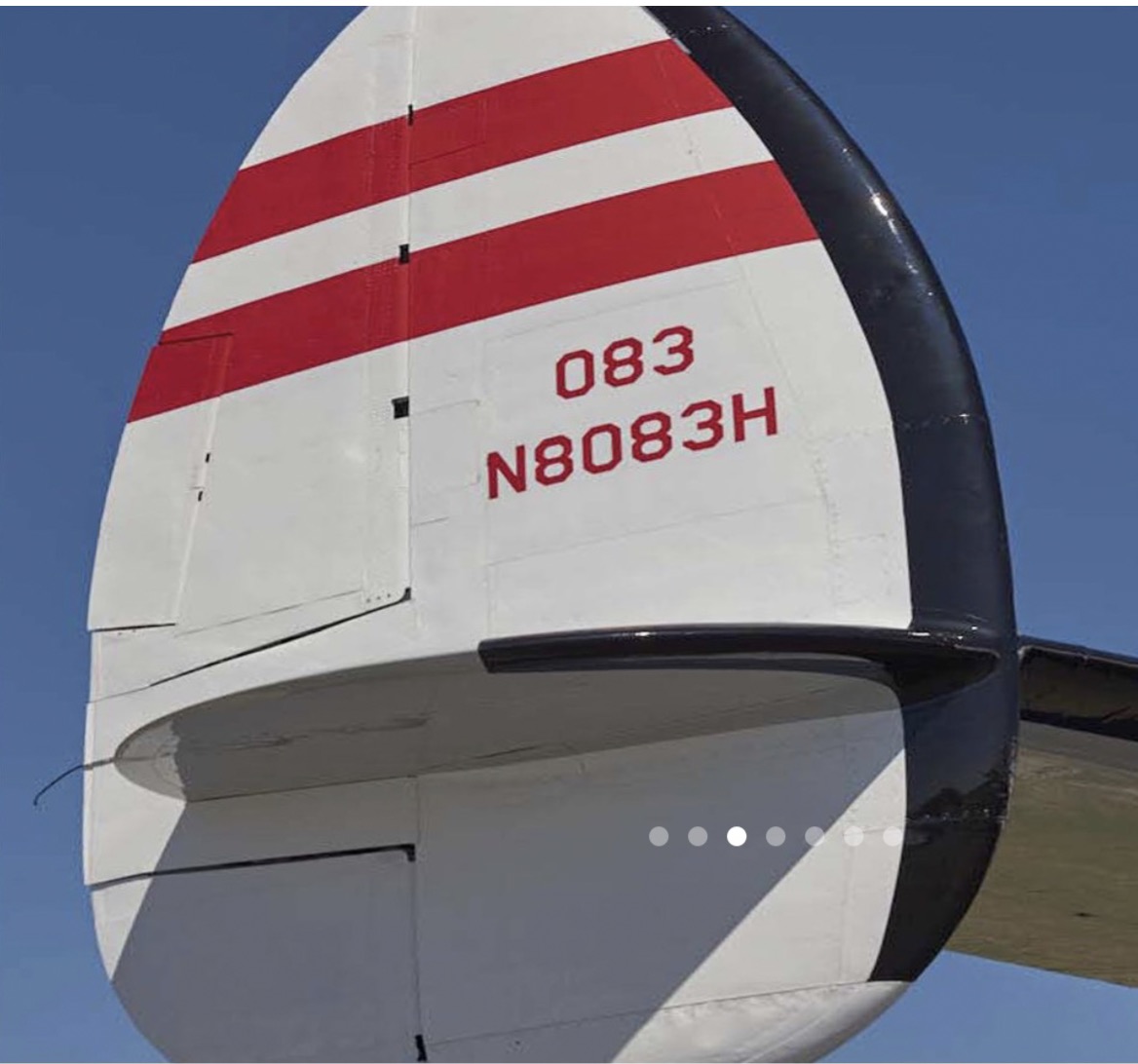 You've come a long way, Baby.... You can see the fantastic history of this airplane at the bottom of this webpage. -------------------- back to Alaska Airlines  Alaska operated a number of Lockheed Hercules  Convair 880 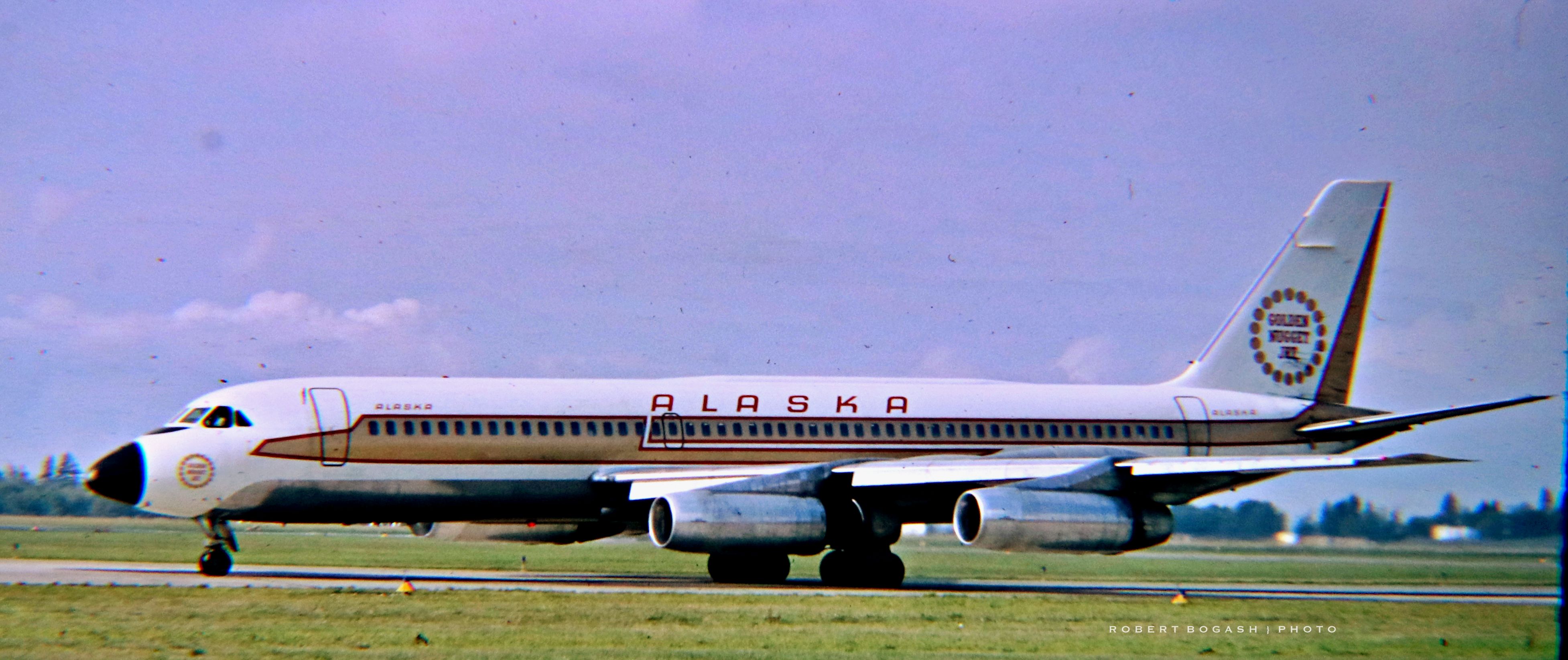 Convair 990  Boeing 727 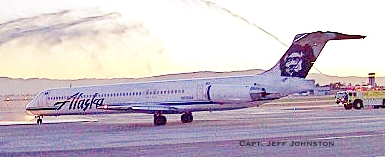 MD-80 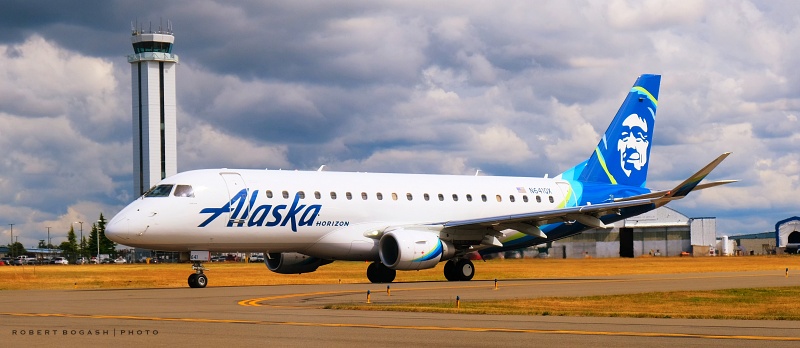 Embraer at Paine Field 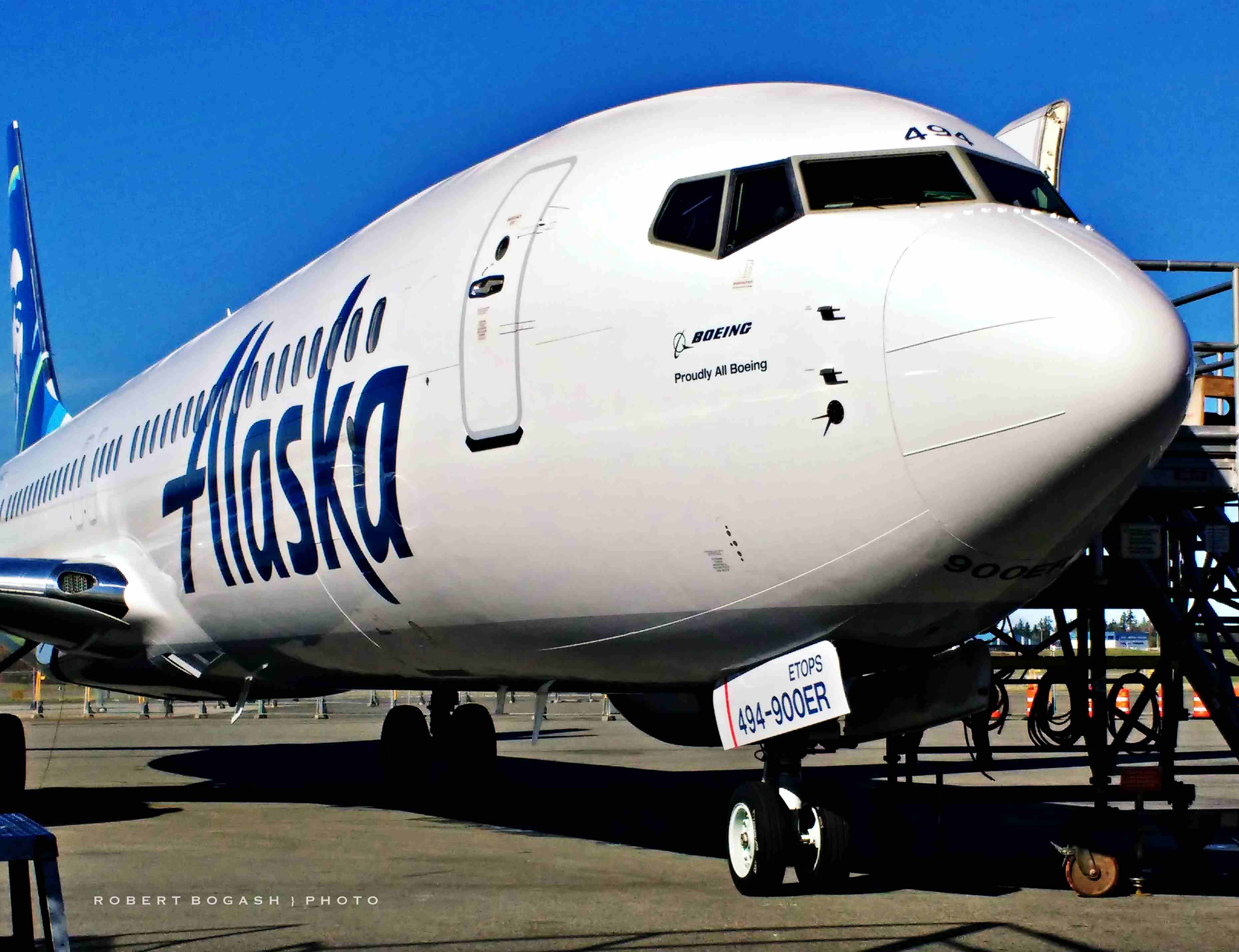 and finally - Boeing 737 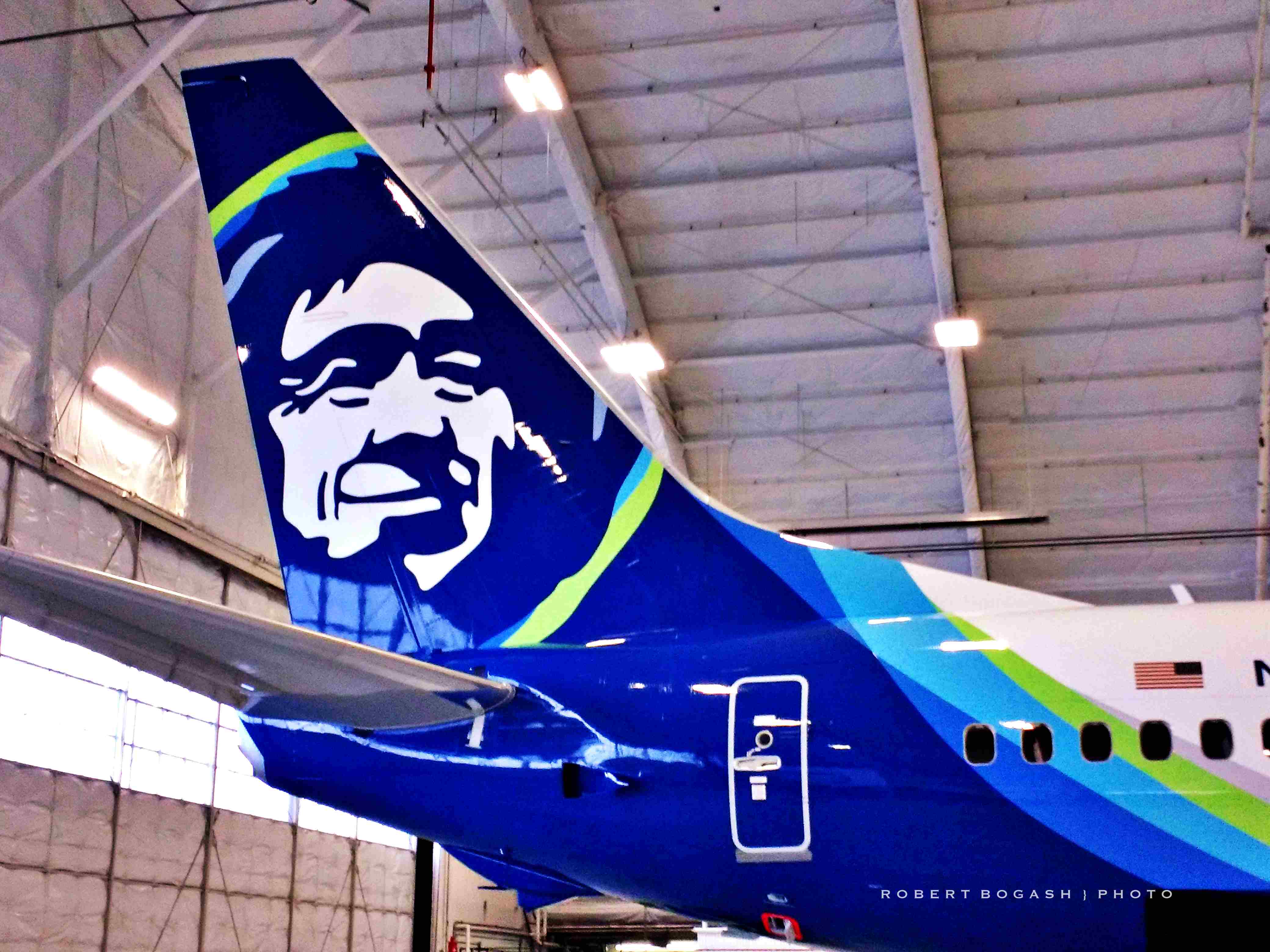 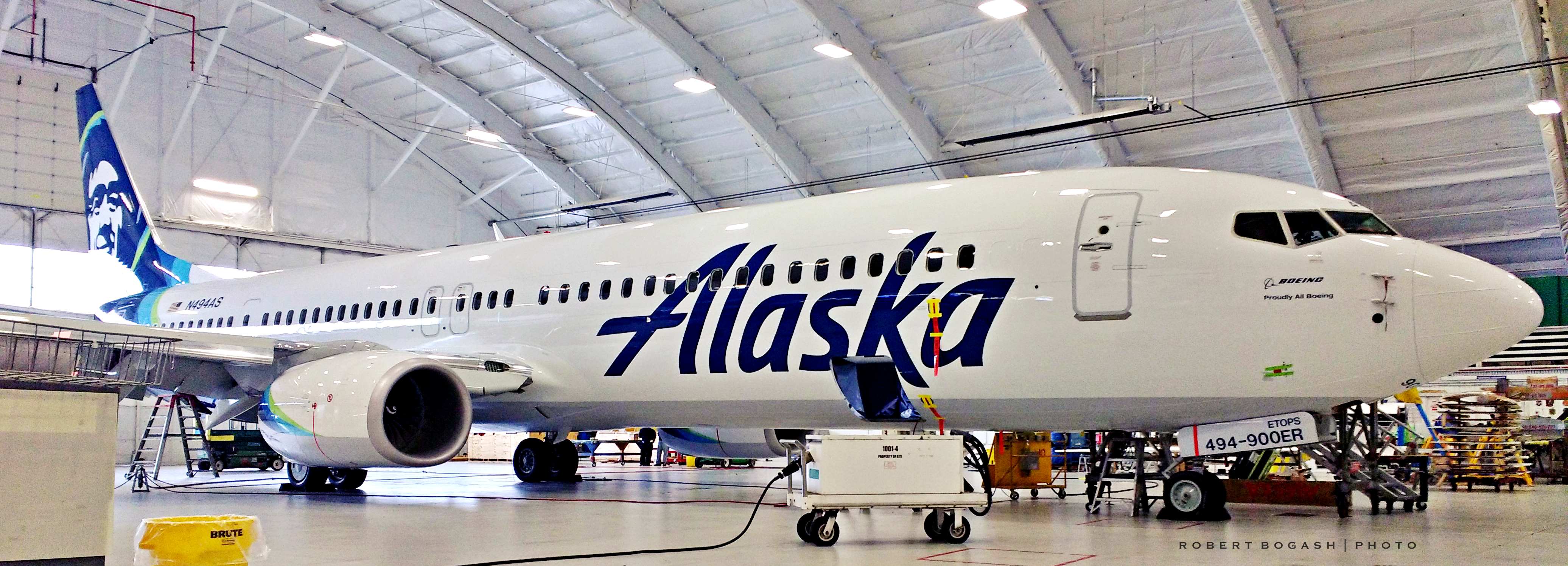 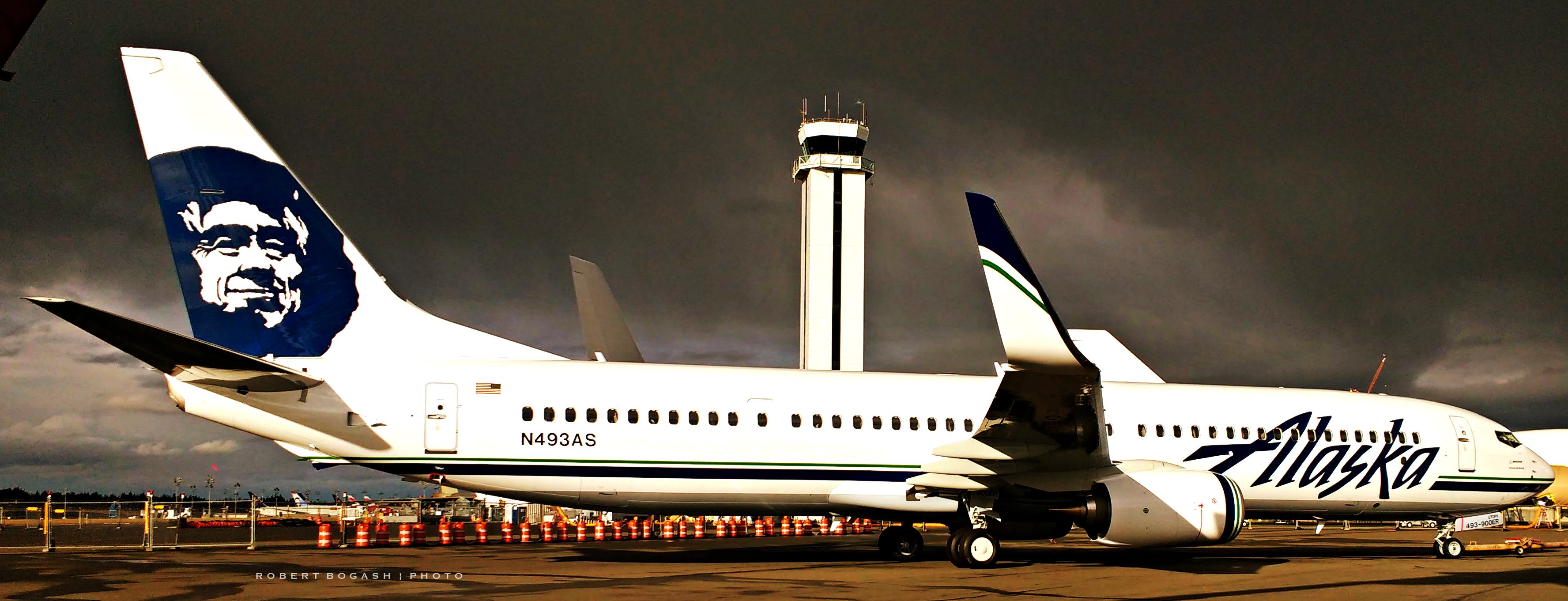 Hope you've enjoyed this trip down Seattle airlines memory lane.
Airplane Photo Index PageMore photos here:
History of N8083H courtesy of Ralph Pettersen
You can see why airplanes have Souls and if they could only talk, have had more than interesting lives! |
|||
|
Copyright 2024 Robert Bogash.
All Rights Reserved
|